
Ni hao
你好
(Knee-How)
China’s Flag
China is full of travel, food, and adventure, so much so that it is dizzying to put it on paper. It is hard to know where to start, so let’s start at the beginning with some basic information about China.
ABOUT CHINA
China is located in Asia and is the third largest country at just over 3.7 million square miles. The population is over 1.4 billion, number two after India. The capital is Beijing, but the largest city is Shanghai. China spreads from 3.8 to 53.5 degrees north and spans five time zones. This large area has diverse geography from beaches to high mountains and weather from tropical to snow. The currency is the Renminbi (RMB) or the Yuan (CNY). They are interchangeable terms. The conversion was 1 USD to 7.2 CNY.
The official language is Mandarin. Cantonese and many others are also spoken, including numerous dialects. They are different enough that one will not understand the other. The dominant religion is Chinese folk religion. There is also Buddhism and Taoism. The Tier One cities are large, and the countryside is very rural. The government is, as many know, complicated. The Chinese Communist Party leads it. The People’s Republic of China is the name used for China, and most Communist states use the term “People’s Republic.” in their name.
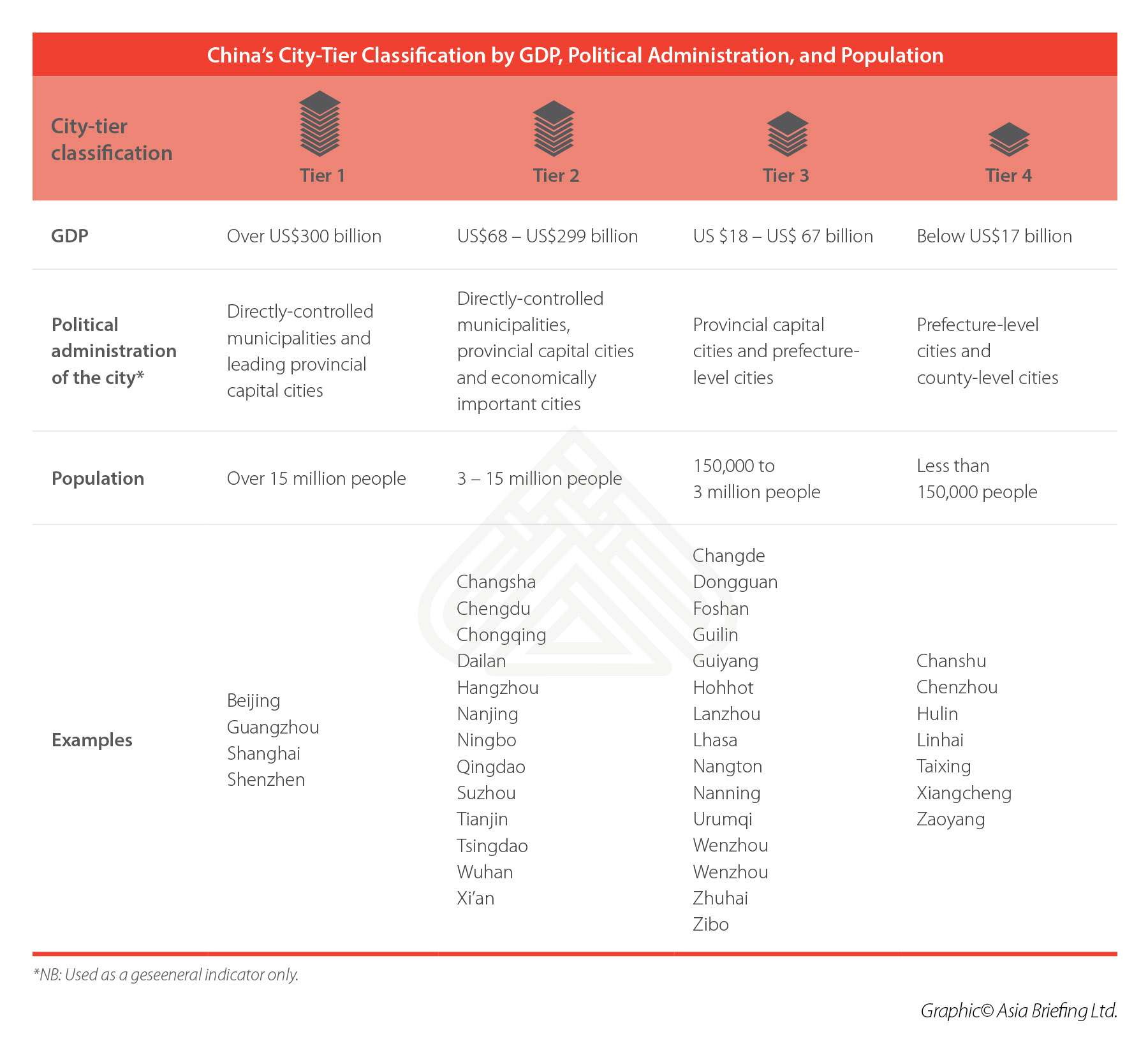
China is divided into Tiers 1, 2, and 3. Tier 1 cities are found on the East Coast. This is where most foreign business is transacted, and you will be most familiar with cities such as Bejing, Shanghai, Hong Kong, and Shenzhen. These cities have the most English, expats, and also considerable pollution. Tier 2 cities are found throughout the country. They are emerging as the next big cities for commerce, but where you will see more poverty and no English. Some famous Tier 2 cities include Wuhan, Chengdu, and Xi’an (the historic capital of China). Don’t let the term Tier 2 fool you; these cities are still large metropolises (over 16m in Chengdu alone). Our trips were in Tier 2 cities, so our experiences will focus on this area. Tier 3 comprises rural areas that are mainly farms and manufacturing. Life in Tier 3 villages is hard as food, and resources are more scarce.
GETTING LOST IN TRANSLATION
Traveling in China requires EXPERT traveling experience. English and Mandarin have nothing in common. It won’t be easy if you do not speak Mandarin. You are unlikely to find any English speakers. Communication requires using a translator app or point and pray for almost every interaction. You may find broken English when checking in for airlines, trains, or a major hotel chain, but it will be very little, even in hospitality. Areas where you would expect English, like customs, still may have none or only one person. You cannot make words out either, as everything is written in Hanzi.
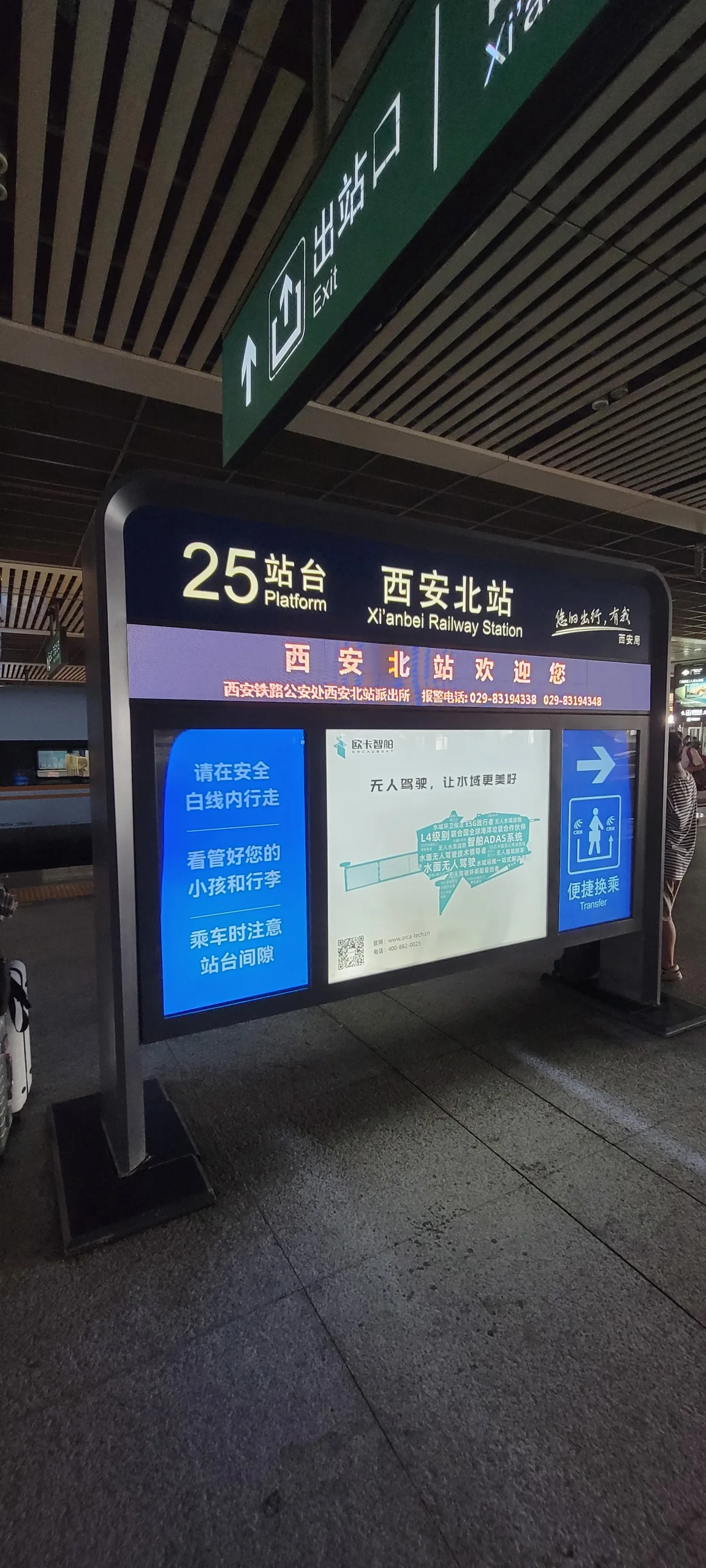
Although English was sparse, the locals were always friendly and tried to help. It is just difficult for both sides. We used translation apps to help communicate, but they are far from perfect. Google works OK. You can type, speak, or scan something to get a translation. It is not perfect and frequently gives incorrect translations. For instance, I scanned a menu and received three different translations for the same word, depending on how far my phone was from the page.
WWW. IS NOT SO WORLDLY
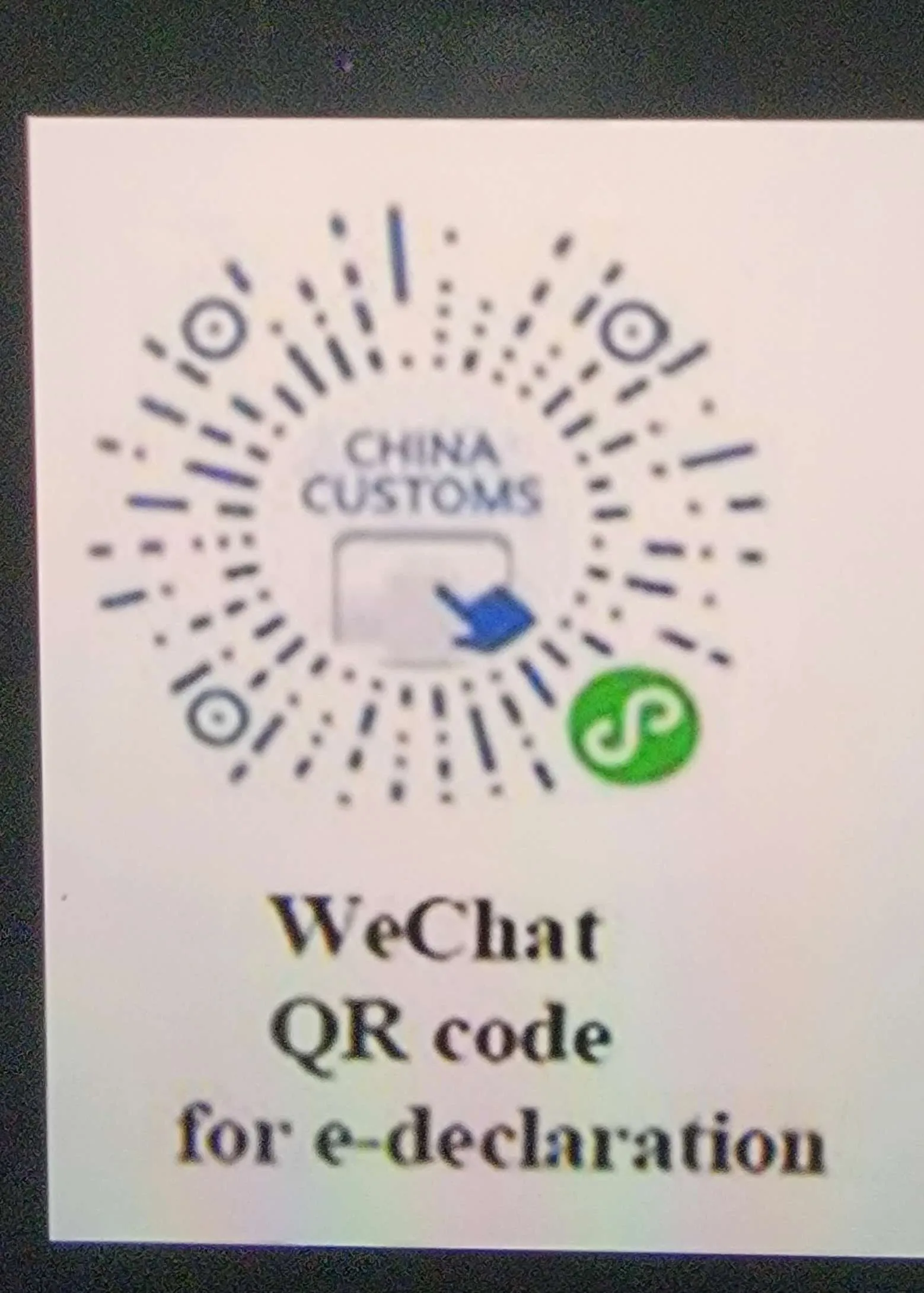
You may or may not know the internet in China, to be nice, is heavily regulated. If you have a Chinese sim, you can use your phone just fine and use Chinese apps from their app store. As a visitor, you will need a VPN to use your native phone and apps. In China, VPNs are forbidden, and they sometimes do not work. As a foreigner, you can get away with using them, but you should have several VPN apps downloaded, as you will have to switch frequently. If they detect one, they can block it. Some of your apps or websites will not work, or you may have to find combinations of your setup. I will use Google as an example. It will not work on Wi-Fi. My VPN will not connect while I am on Wi-Fi. I had to be on my cellular signal and use a VPN to use Google or anything Google made. Most of the apps you hold near and dear are banned in China. Google Maps does not work, and forget about Uber. You have to be very creative in finding local apps made for visitors or constantly translating Chinese apps.

DiDi Rideshare App
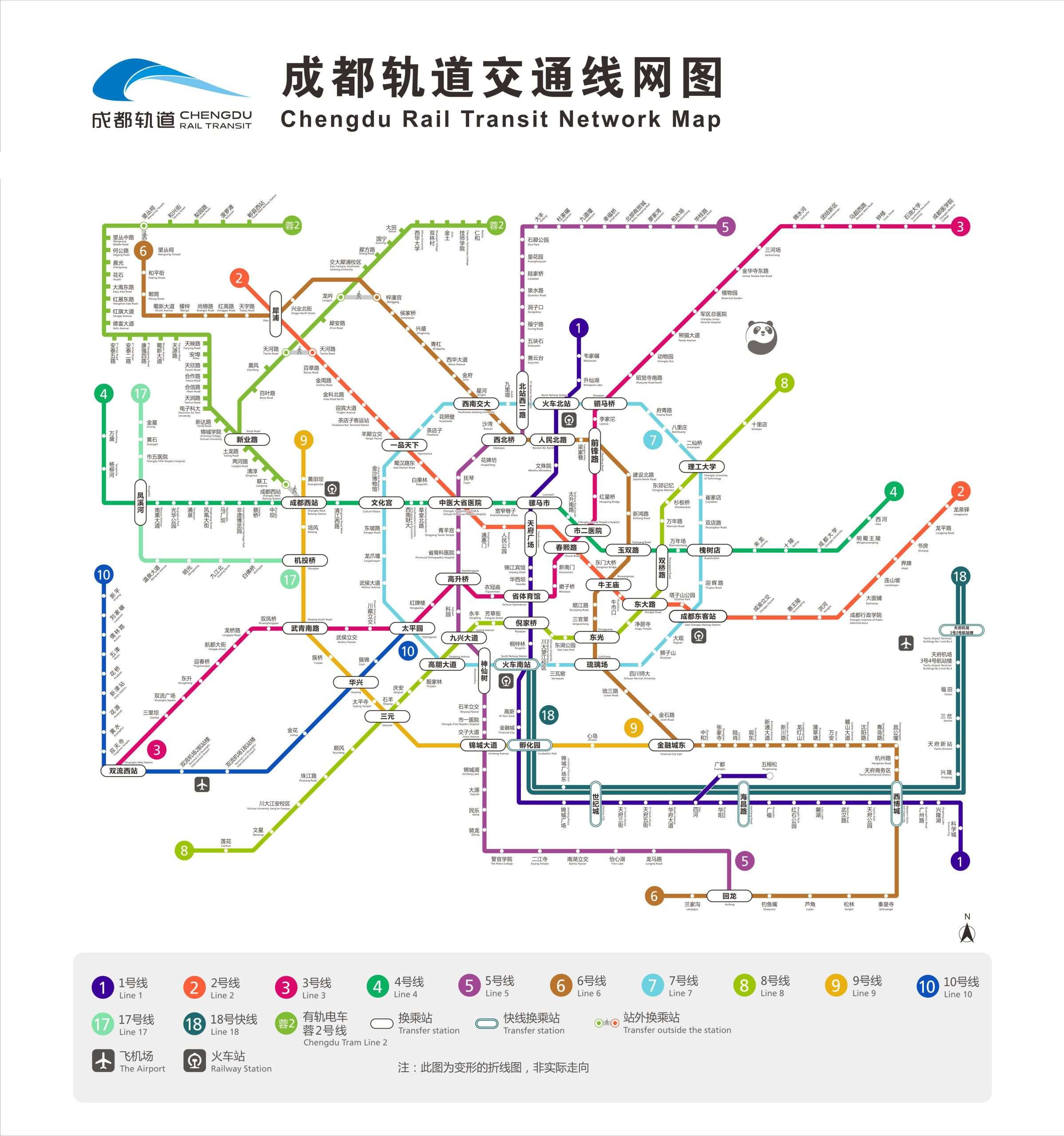
Chengdu Subway Map
CASH IS NOT KING
Over 95% of payments are digital or “cashless” in China, and many local businesses will even refuse to accept cash. WeChat and Alipay are the gold standard of payment apps. WeChat requires a Chinese bank card, and even though it says it accepts foreign credit cards, do not be fooled. They will never activate it. Alipay is the best option for foreign travelers. It accepts foreign credit cards and is accepted in most locations. It is in English and can be set up before traveling. The challenge is that some businesses (especially in tourist areas) do not accept cash and foreign cards through Alipay. In this case, it requires having a balance on your Alipay, this works similar to a prepaid card. The only way to load money on the card is to transfer it from a Chinese bank. Thankfully, Brandi knows many Chinese locals to transfer funds. If you do not have that luxury, you may wait a while to get money and trying to use cash.

Payment app

BEFORE YOU LEAVE
Every country requires a visa, visa on arrival, or waives the visa based on the type of passport. The United States has the 7th strongest passport in the world. This means that for most Americans, travel requires a visa on arrival or no visa and is free. China does not provide a visa waiver for United States citizens, so you must apply for a visa and complete it at a Chinese embassy or designated office before leaving. The forms are similar to a passport application, requiring detailed information on you and your immediate family. The form is complicated and long, 8 pages, so be careful filling it out. It also requires purchasing air and hotel tickets BEFORE applying and having a local sponsor in China.
For Americans, we receive a ten-year visa. It cost about $300 and was very fast to get, at least in Singapore. You have to relinquish your passport for 3 business days if you select express; otherwise, it is longer, where they complete the visa and glue it into your passport, taking up one page. (What else do they do with your passport during those 3 days? Hmmmm) Upon arrival, be ready for some waiting. They want to verify everything, so have printouts of all documents and itineraries.
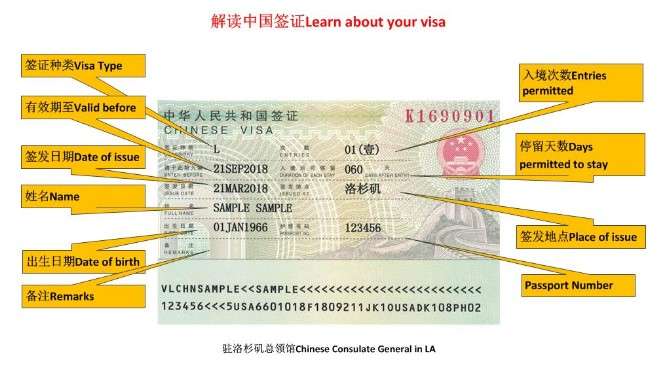
Chinese Visa Sample
XI’AN (shee-aan) – THE ANCIENT CITY
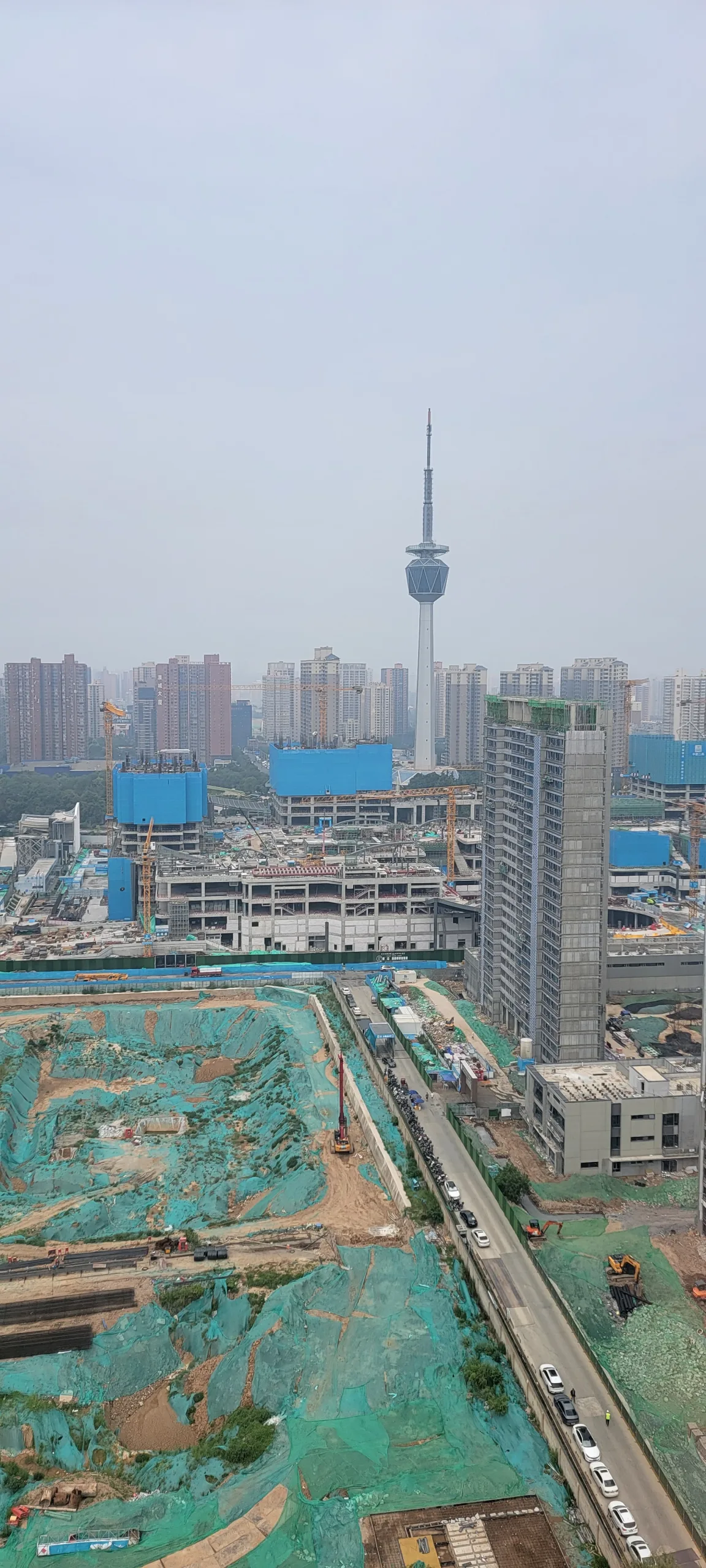
Xi’an buildings and construction
The first stop for Brandi’s second trip to China, and my first, was Xi’an, a city proudly wearing its historical tapestry. The population is 13 million. The highlight, of course, is the iconic Terracotta Army, an eternally silent army of thousands of life-sized soldiers guarding the tomb of Emperor Qin Shi Huang. Witnessing these ancient clay warriors is a humbling experience, transporting you back to the Qin Dynasty. We hired a tour guide, who we will call Tom. Tom is a local who speaks English very well. He had a very nice van and driver that picked us up at the hotel. We rode about an hour from the city, and the mountains were beautiful and scenic.
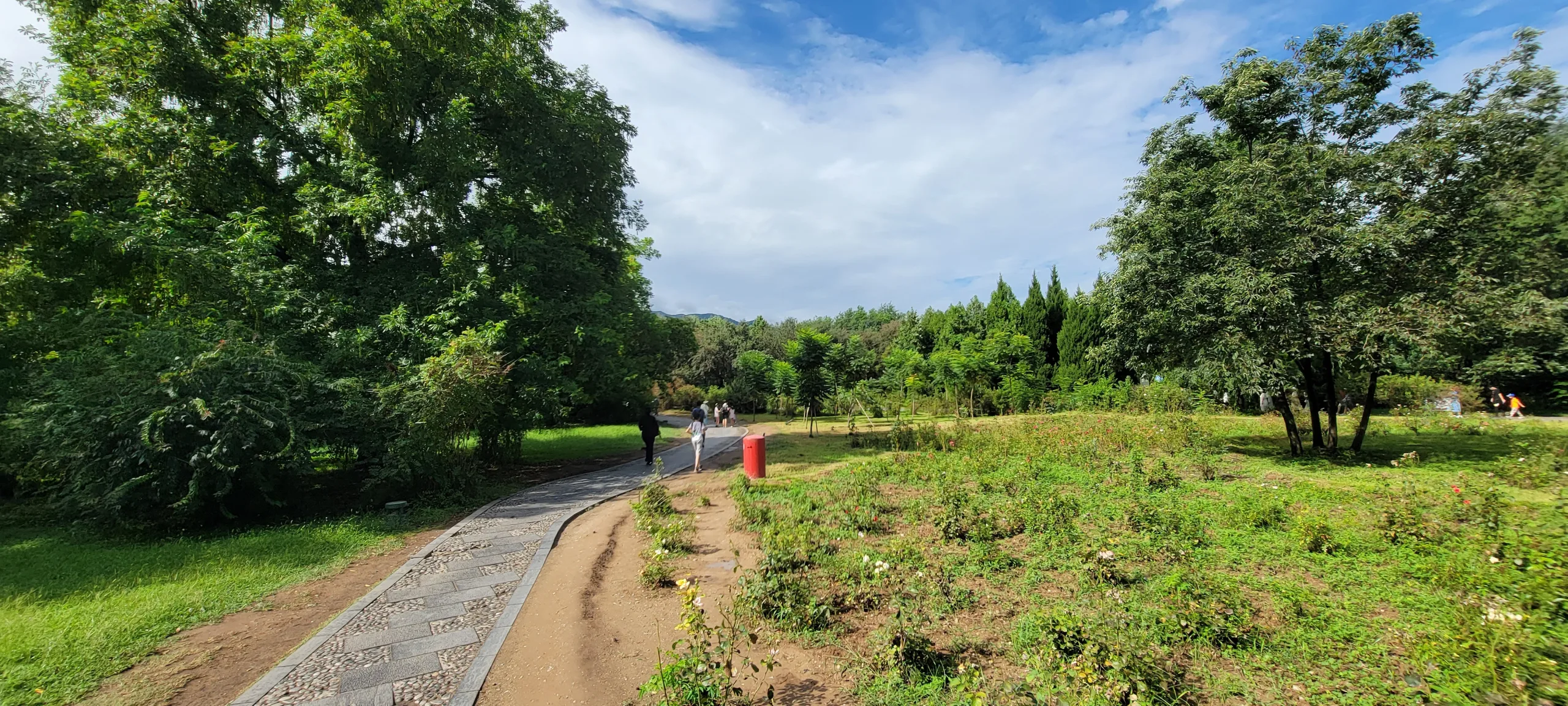
Mountainside park of the warriors
As Tom told us, and we soon saw, this site is extremely popular. The high record was 114,000 daily visitors, as the photos will show, or maybe not well enough. The site was packed, and we saw that 99.9% of the visitors were Chinese. Many Chinese nationals never leave China as there are plenty of diverse areas to vacation. The crowd surfing began with the line and continued with a short walk through gardens on the way to the tombs. We fought through crowds to find an open spot to view. As we learned in Hong Kong, they do not queue. A 70-year-old lady was attempting to push me to get to the front. Brandi was a champion and made her way to the front, but there was no way I would deal with that crowd. The Warriors are a must-see if you get a chance. The detail on all the warriors and this place’s enormous size is incredible. Seeing ancient engineering in person is pretty impressive.
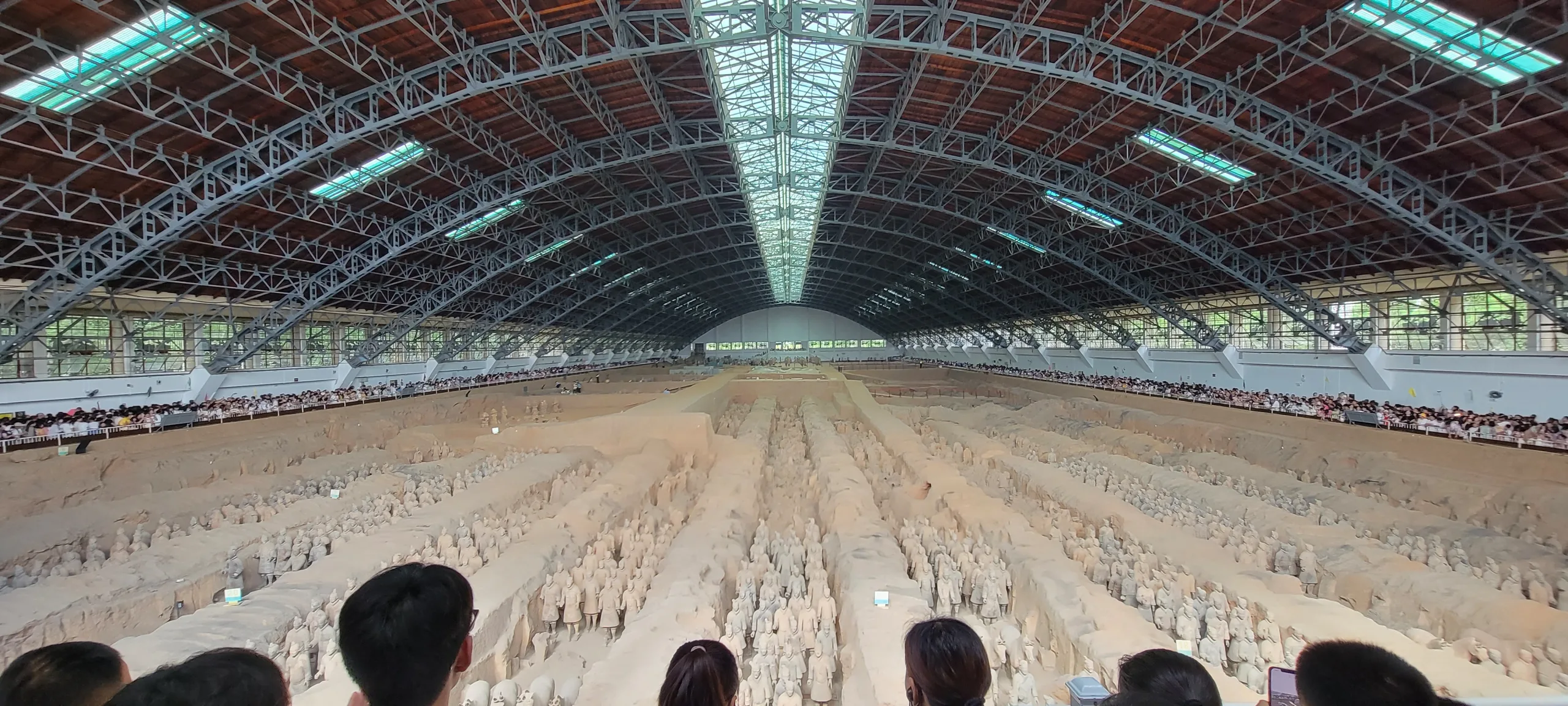
Overall view from the end. Very crowded, so I left the people in the photo.
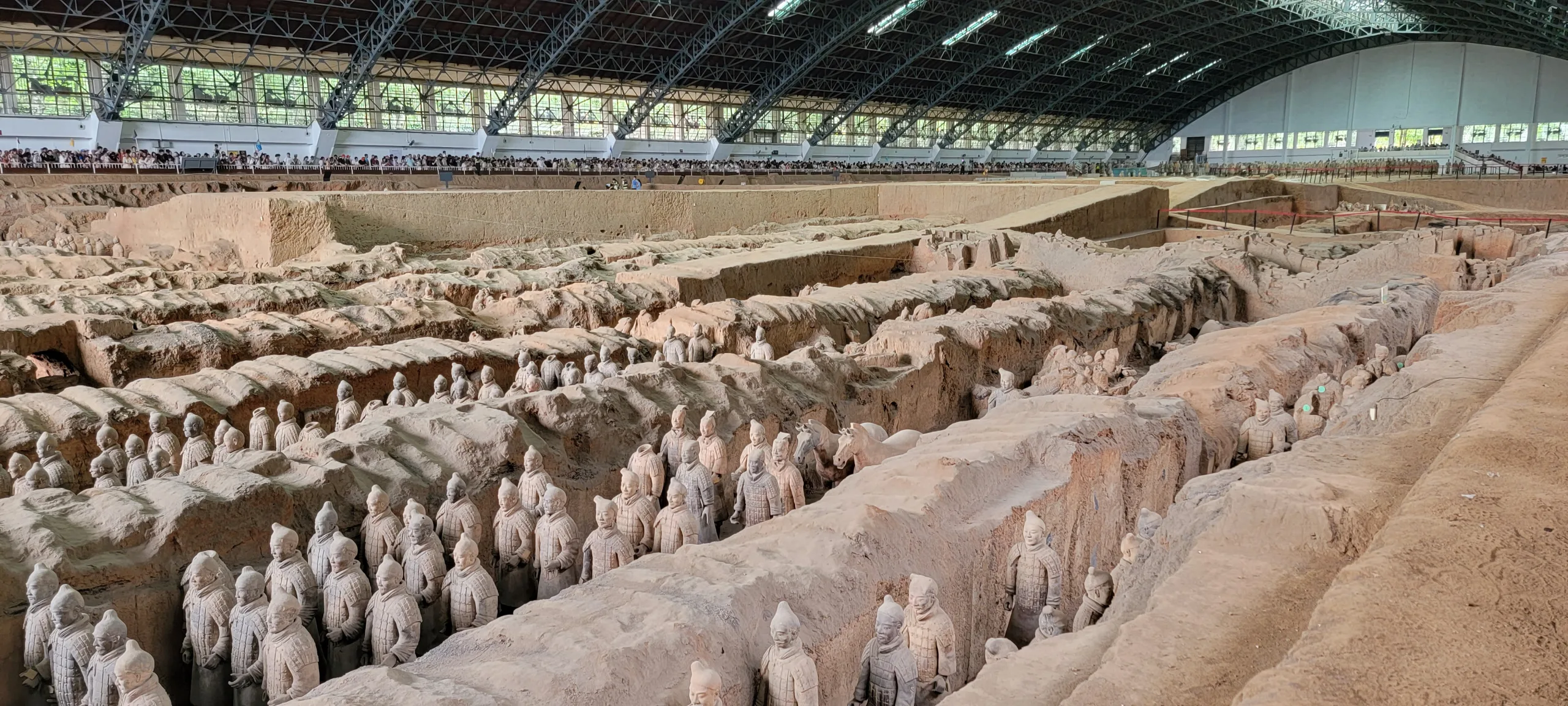
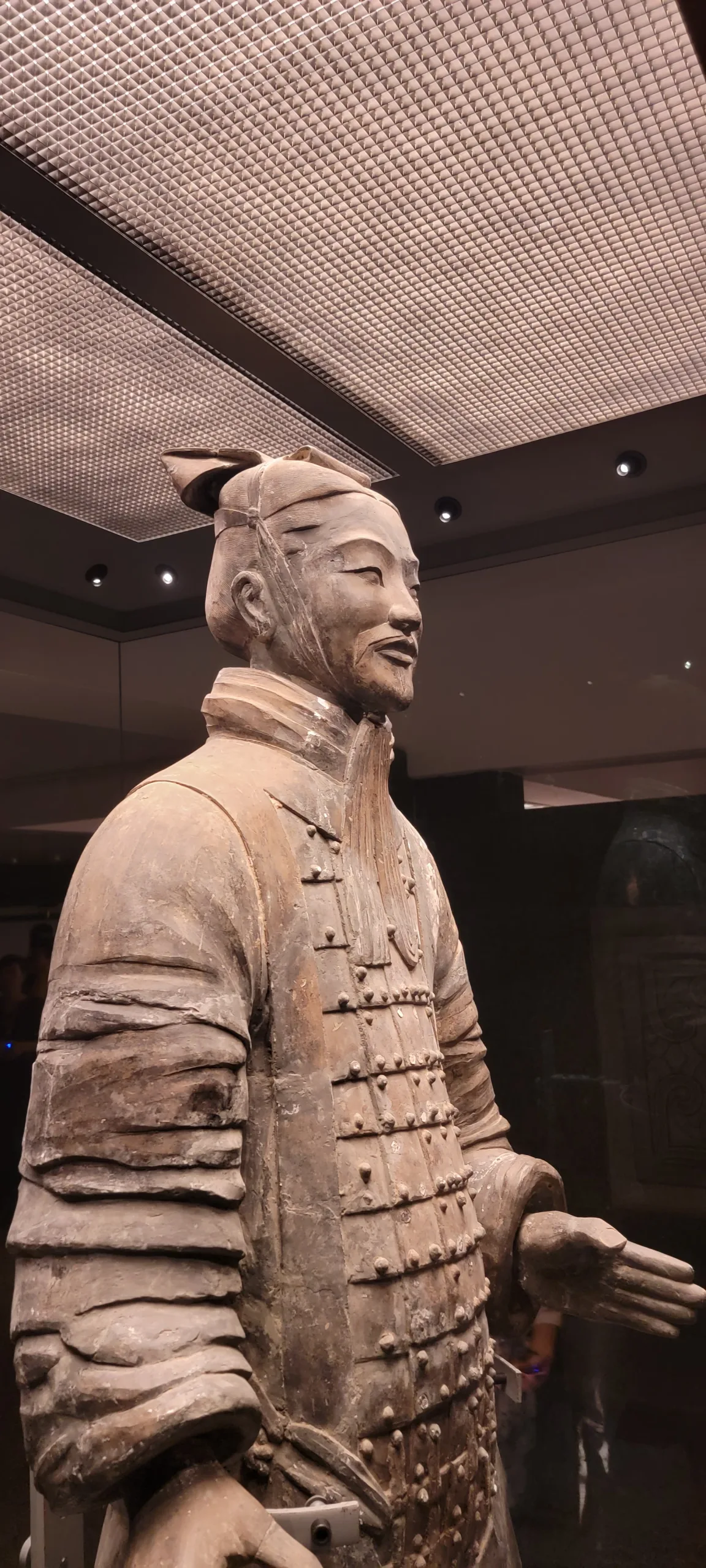
Incredible details
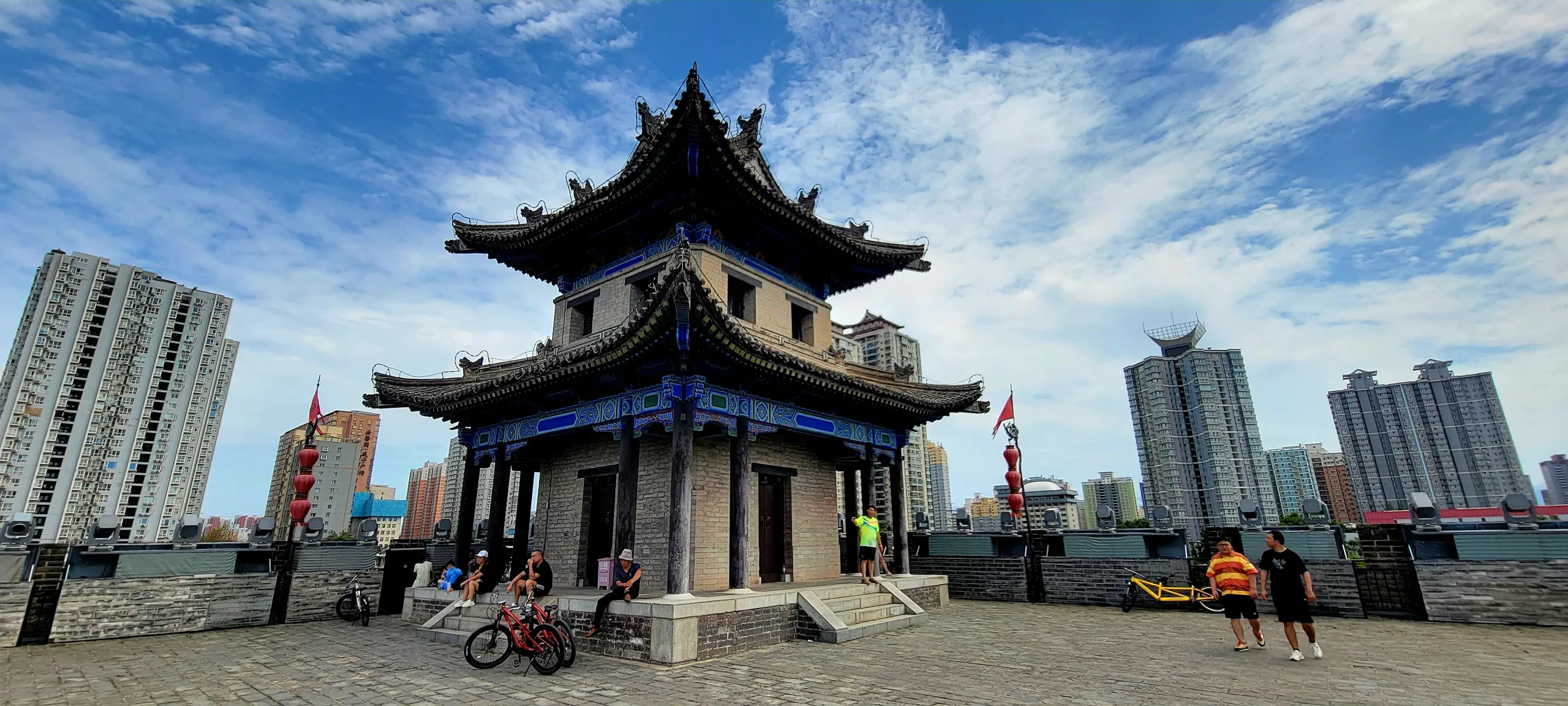
Apart from the Terracotta Army, Xi’an’s city walls, built during the Ming Dynasty, provide a unique city perspective. There are bicycles for rent, and you can ride along the ancient fortifications, catching glimpses of traditional markets and modern skyscrapers. Xi’an was the capital for most of China’s history, which was the purpose of the walls. They surrounded the city for protection. The name Xi’an means west peace. It was the western part of China, and they hoped for peace and a peaceful environment.
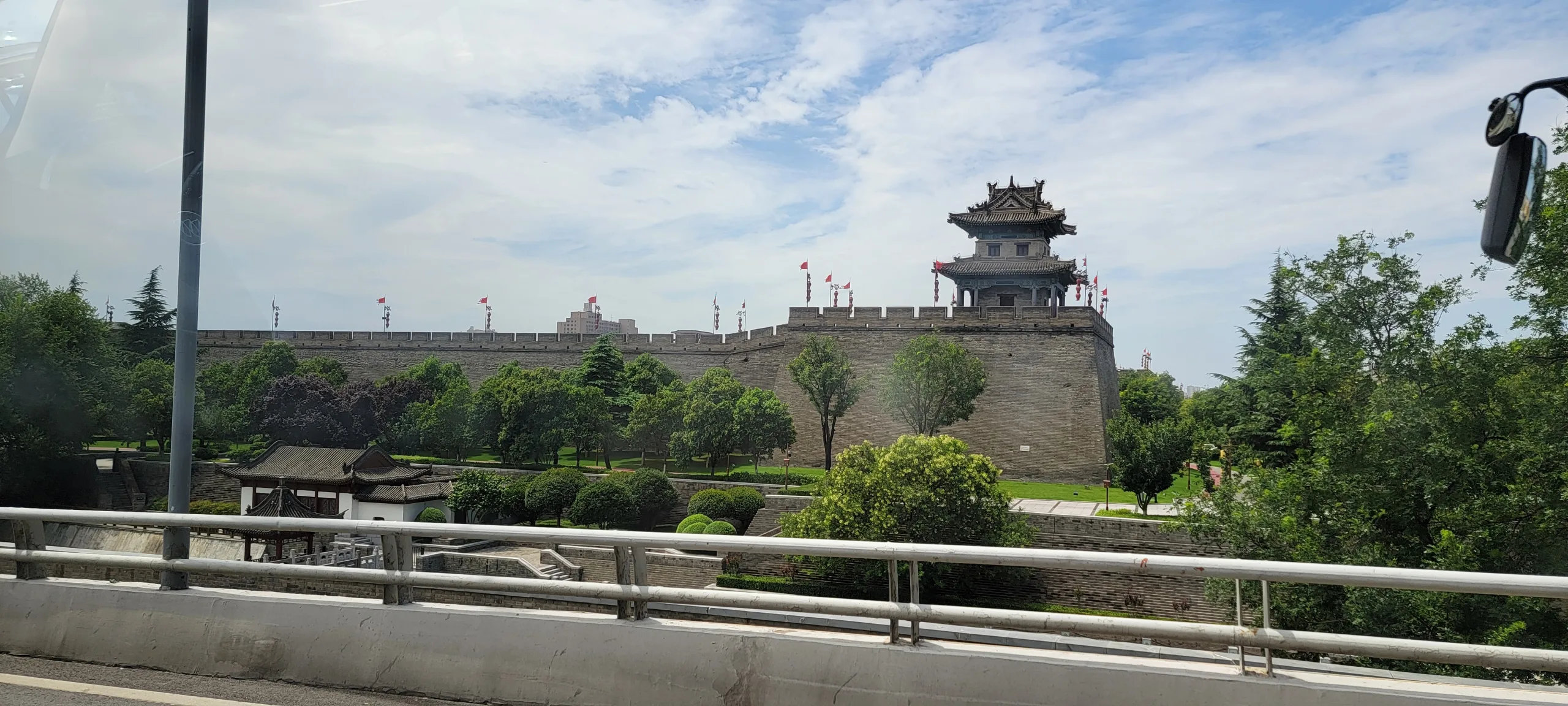
Corner and tower of the wall around Xi’an
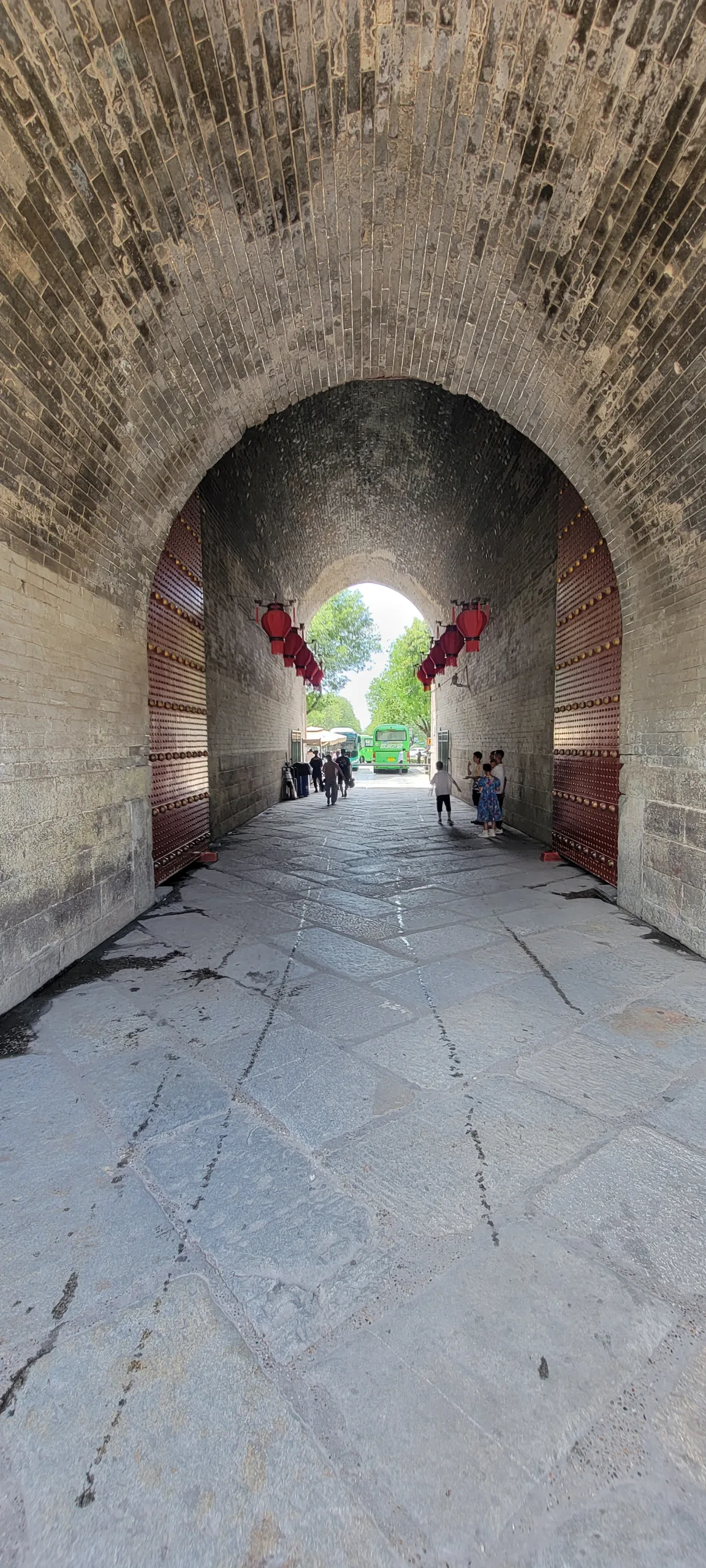
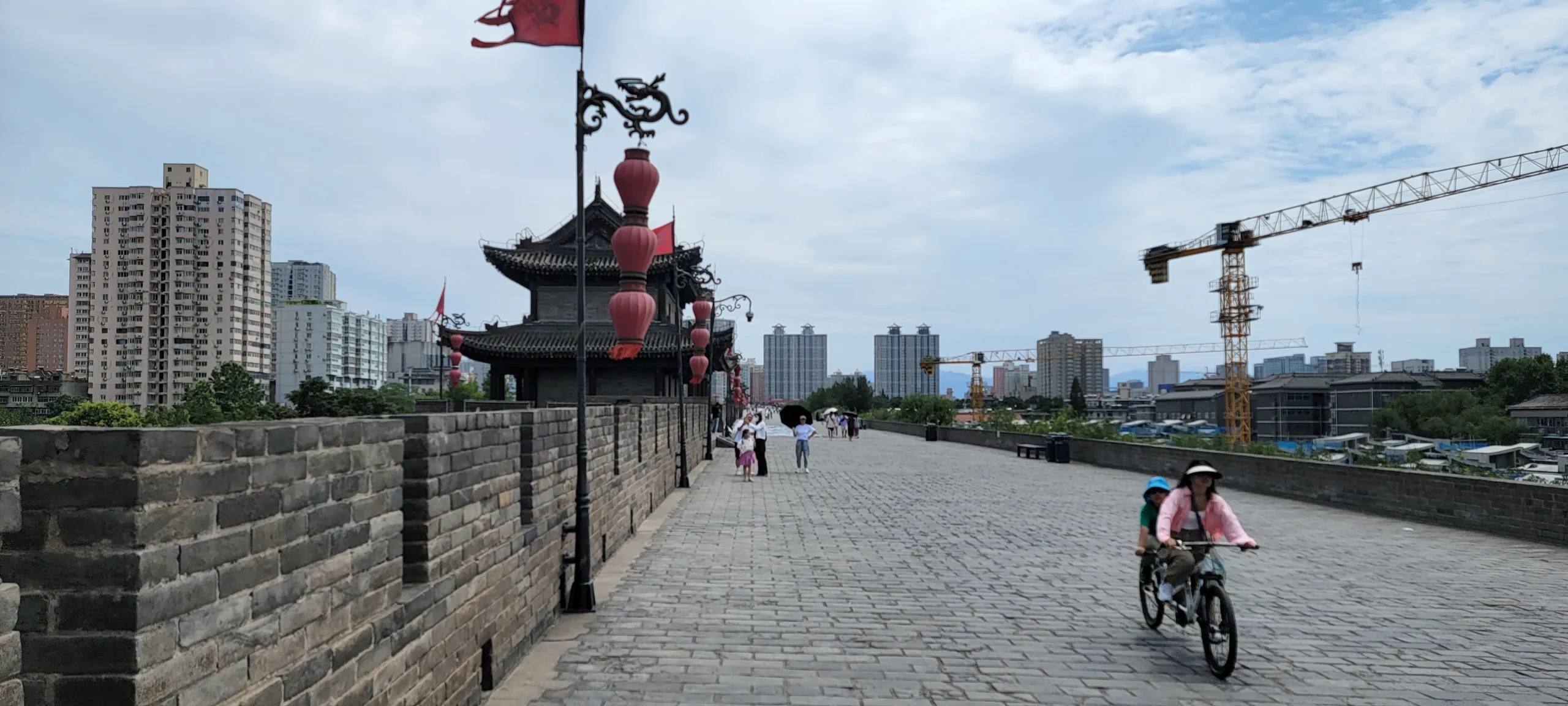
Walking on the wall
Inside or outside the walls, there is much to see. We wandered as usual, and although it is a large city, we did not feel overwhelmed by the number of people. There are great areas for street food and your typical malls and stores. A unique area here is the Muslim quarter. The Silk Road started in Xi’an and brought trade from the Middle East. As a result of this, the Muslim religion spread to this area. We also saw many vacant tall buildings meant to be apartments. These buildings would be a common theme for the trip as the economy is struggling to recover post covid.
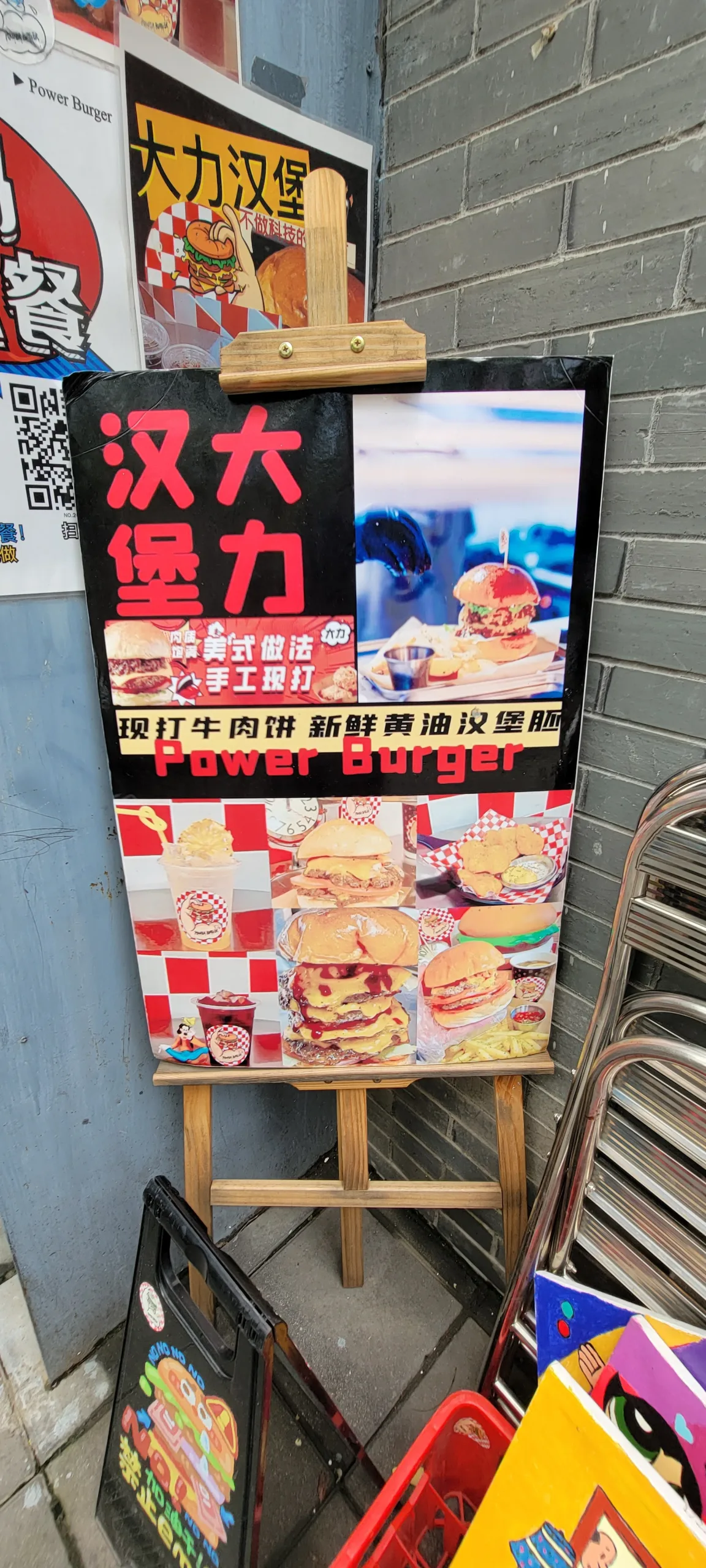
When you need to power up!
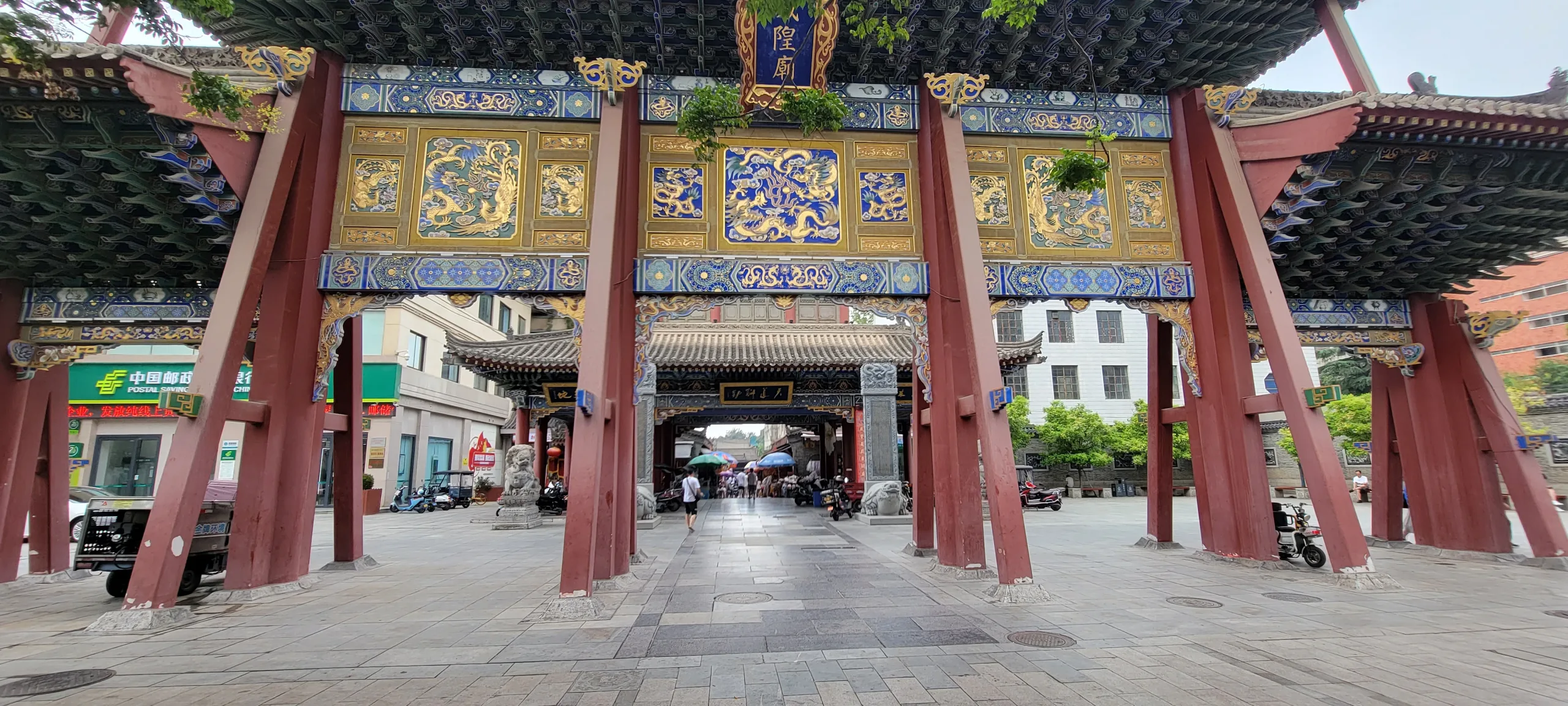
Muslim Quarter.
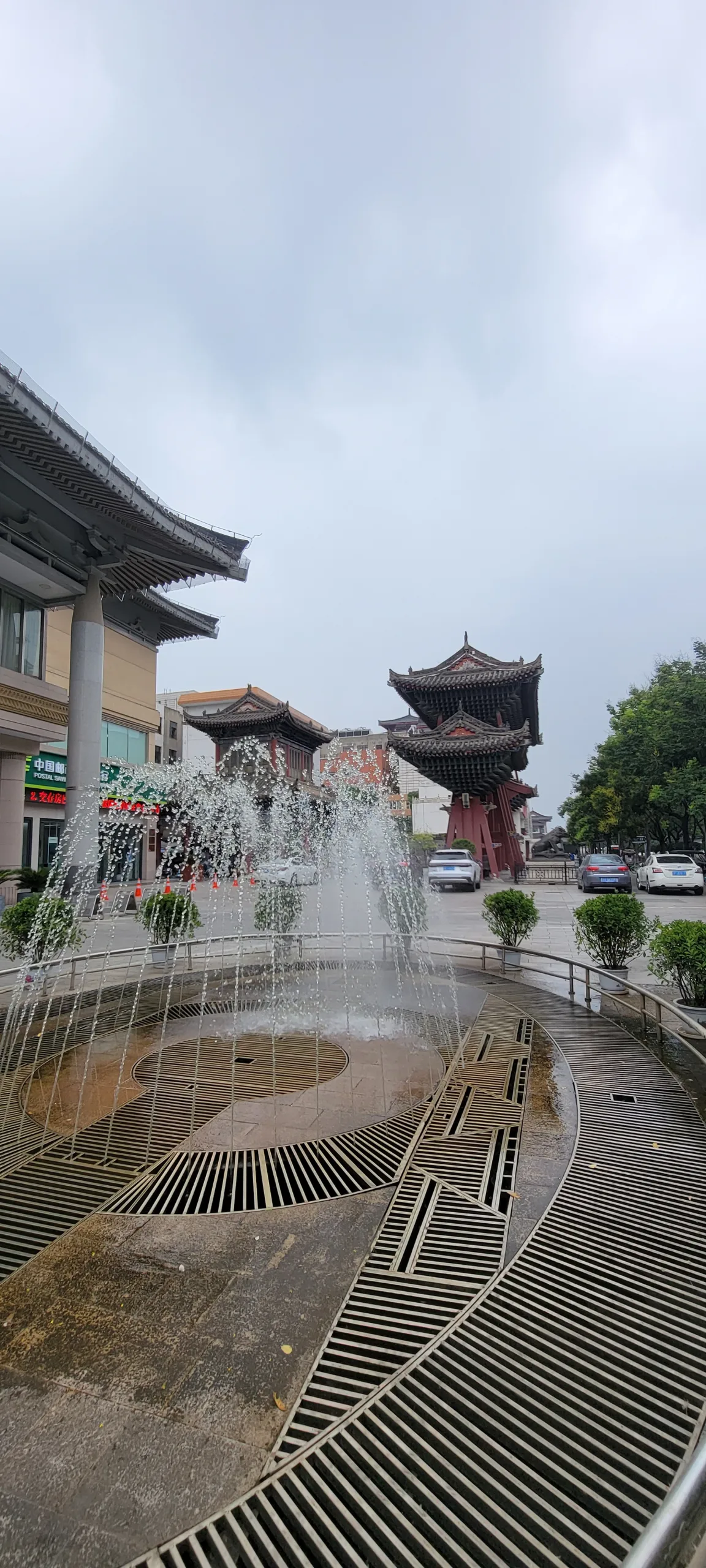
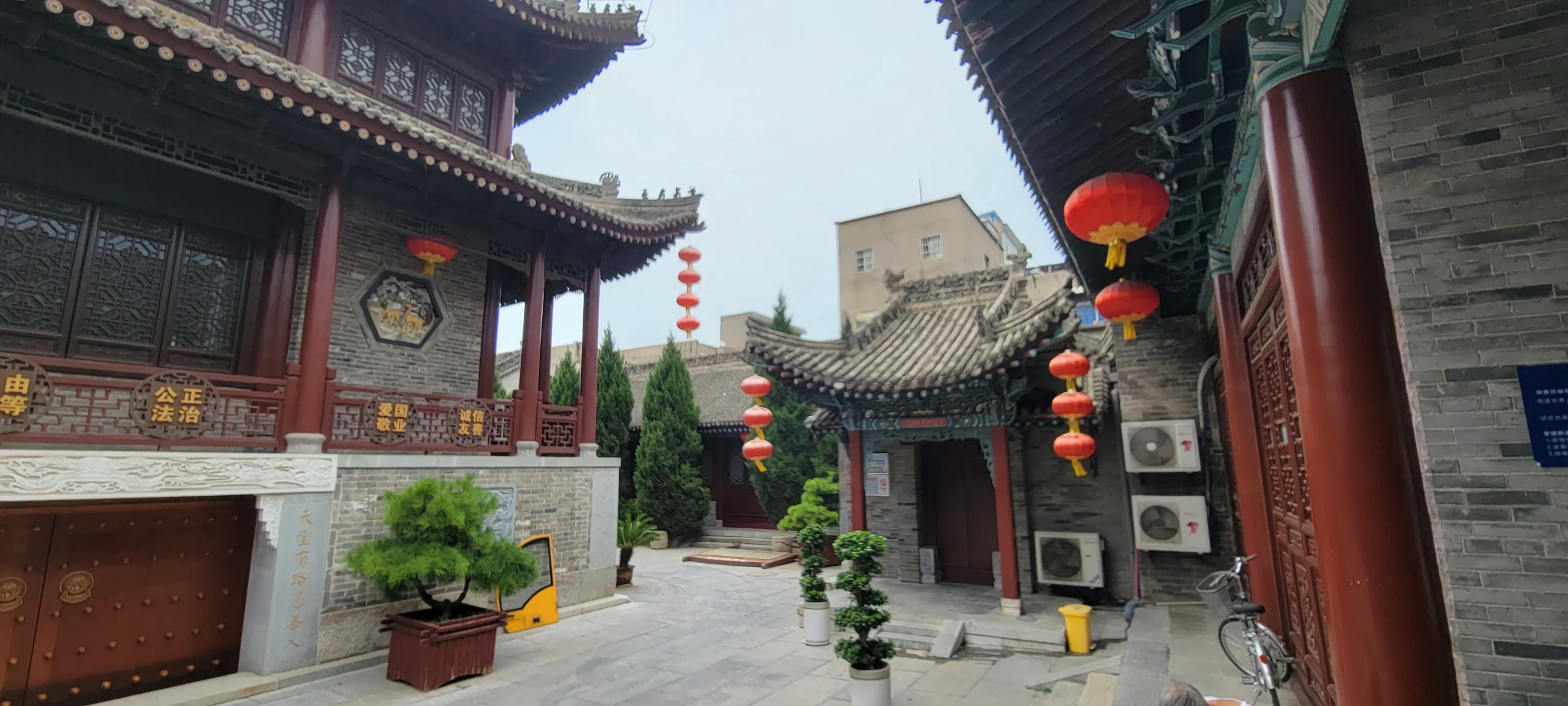
Beautiful temple
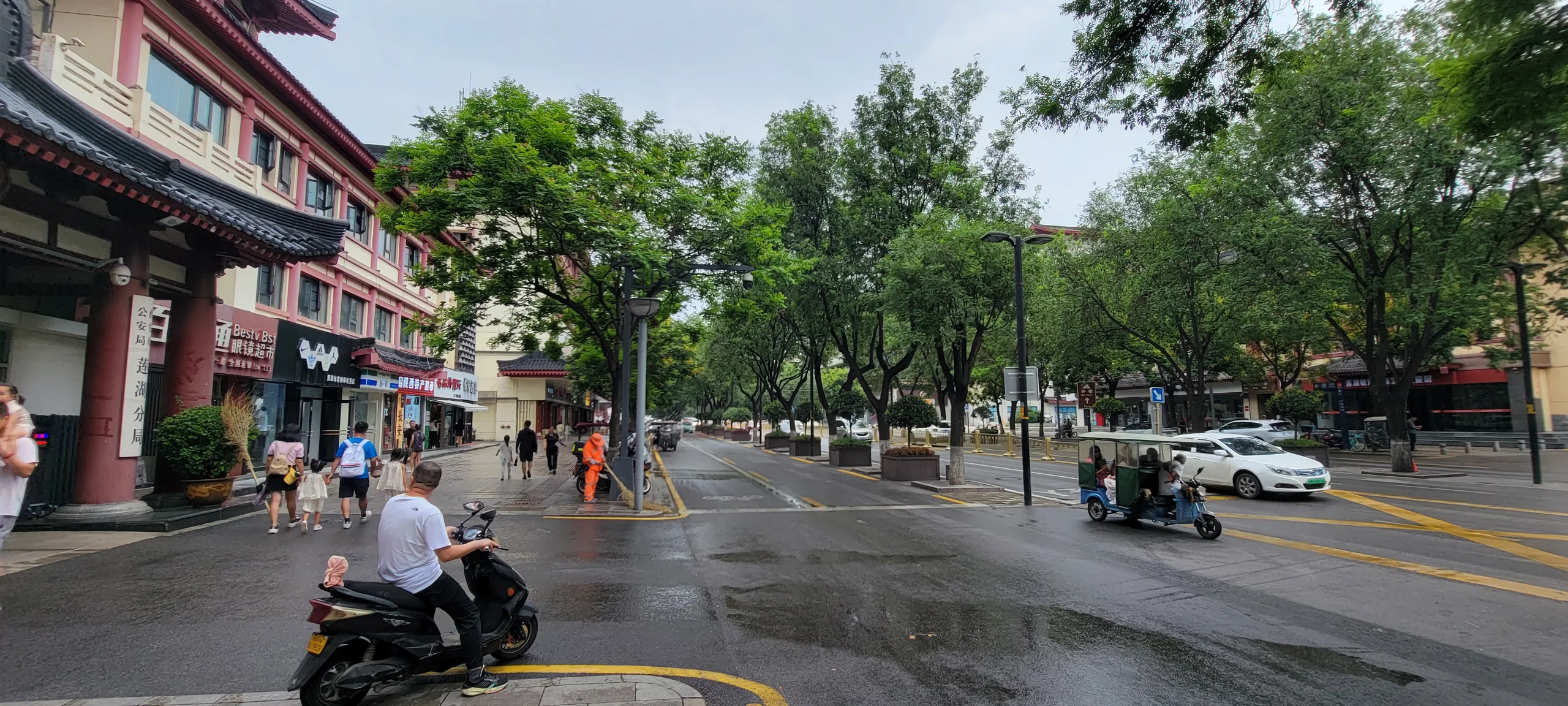
The average street in Xi’an
FAST TRAINS
We booked a train to our next stop, Chengdu. The train was not a bad experience. As I have said before, I love train rides. Something about them feels timeless and classy. This one is a high-speed rail capable of 220 mph. We booked a first-class ticket. We have found this is usually worth the extra money and, in most cases, not that much extra money, which was the case here. Of course, we had to use a translator app on the ticket to find our way as no one we saw spoke English. We were able to use a lounge before boarding. This lounge had an unknown perk. They scan your ticket when you enter and note your train. When it is time to board, they call you up and escort you to the track in a group, which is standard practice.
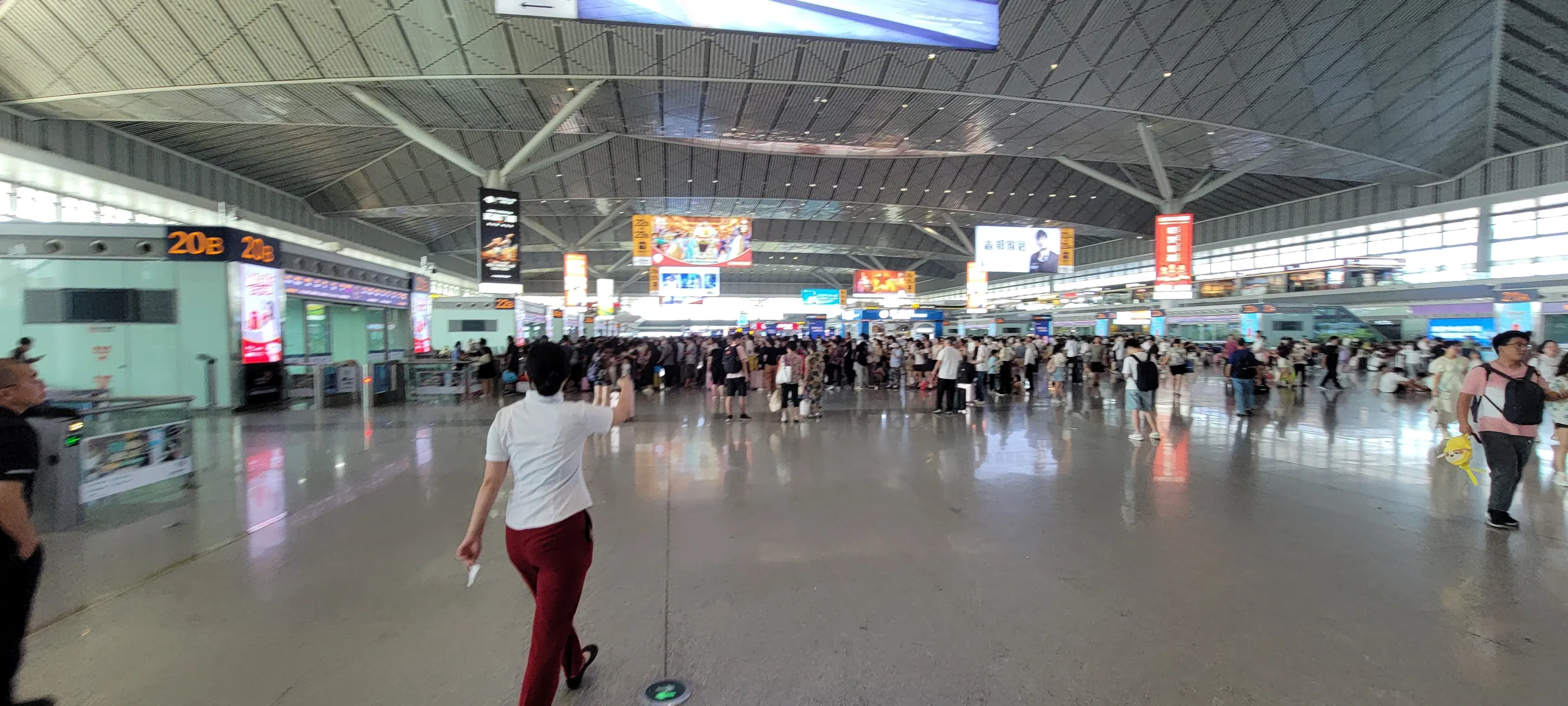
Busy train station.
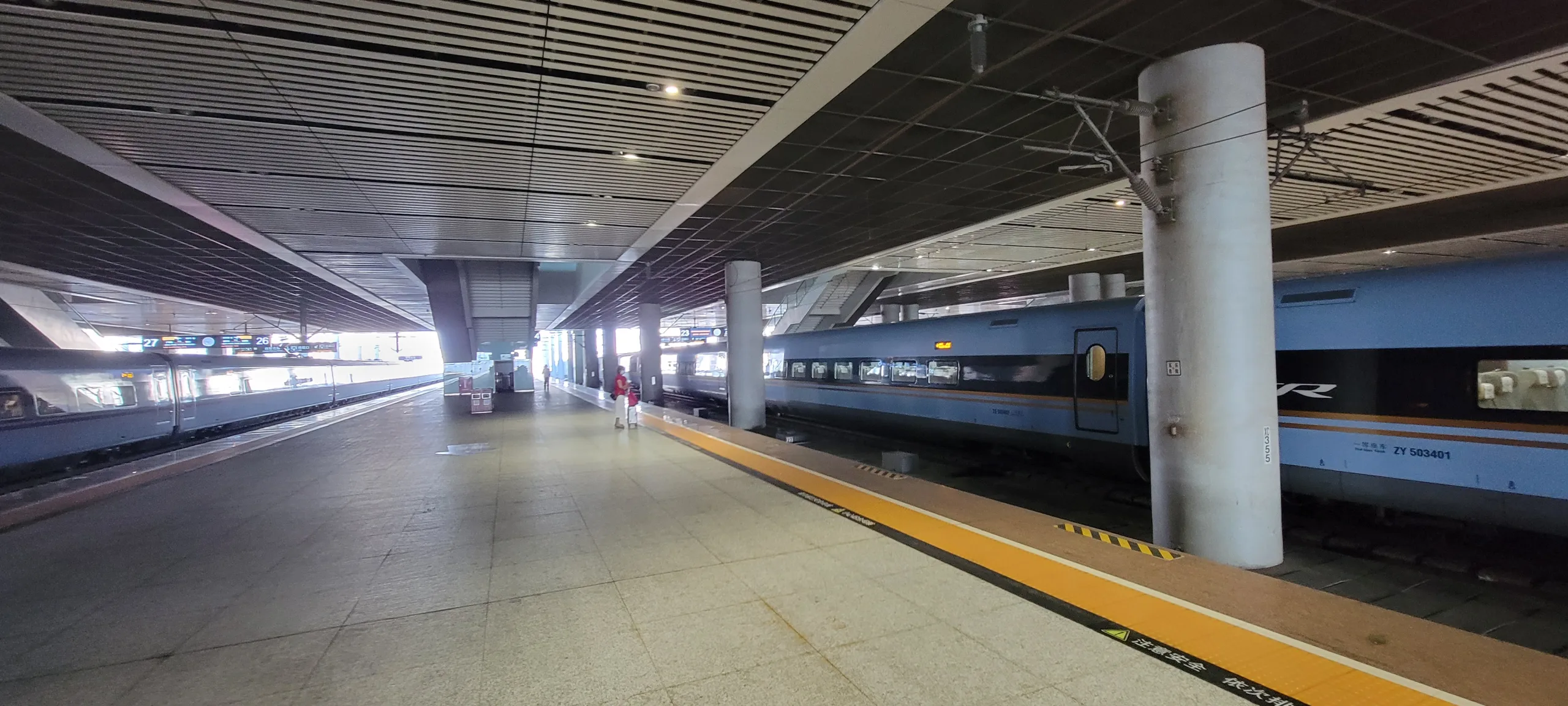
Fast train!
The car was very nice, with comfortable seats that lay flat. As part of your fare, you get slippers, food, and drinks. The ride was extremely smooth, relaxing, and very fast. The scenery quickly changed to fields of farmers and mountains. We passed through countless tunnels, and we thoroughly enjoyed the scenery. I highly recommend traveling by train, as it is faster than traveling by air and much more convenient.
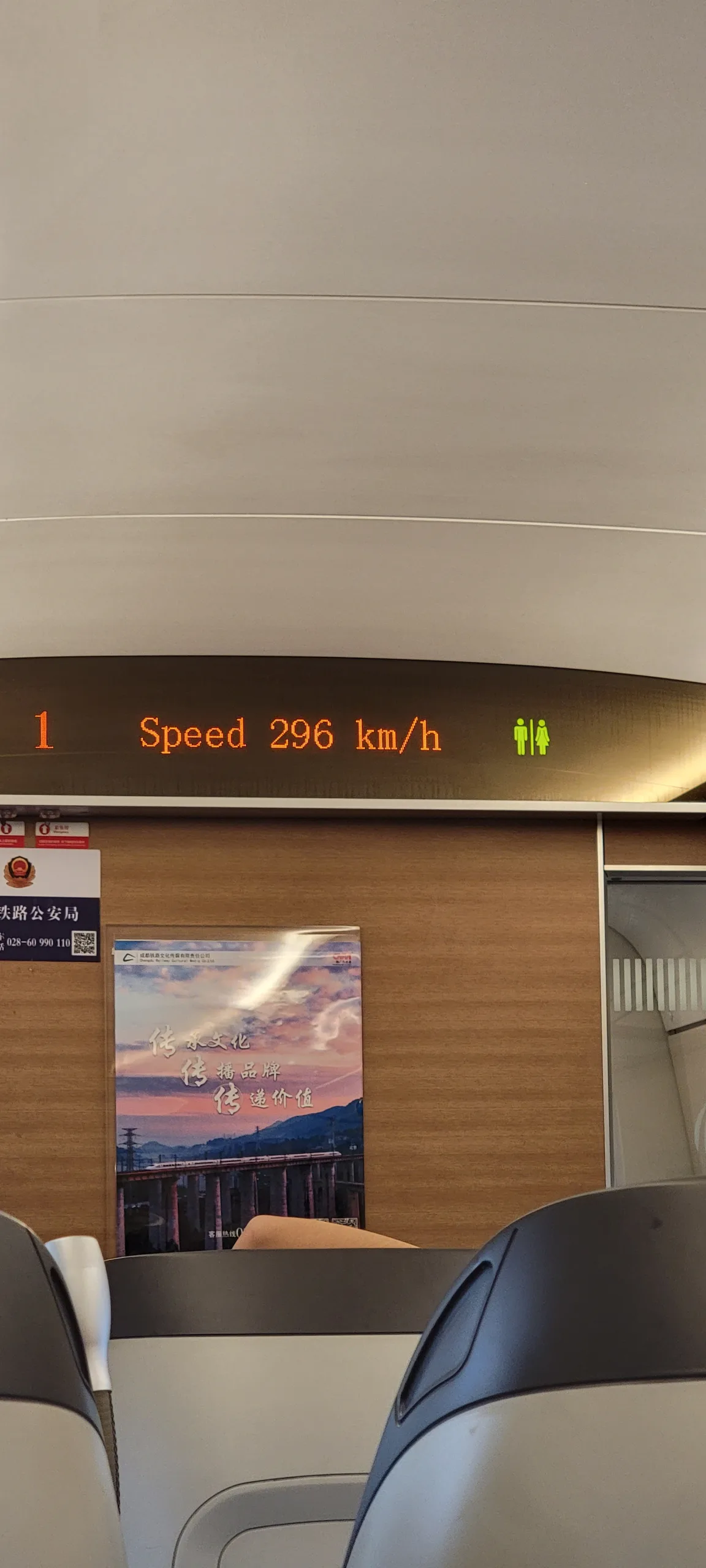
So you are in a hurry? No worries.
CHENGDU (chuhng-doo) – SICHUAN AND THE PANDA
Chengdu, the capital of the Sichuan province, has a population of 16.5 million and is on the edge of becoming a tier-one city. This city has every appearance and feel of a tier-one city. It is vast and has numerous high-rise buildings covered with LED lights and active displays showing dancing panda bears and advertisements. Our hotel was across from a mall adorned with LED displays and high-end stores. Chengdu feels very much like a significant downtown city in the US.
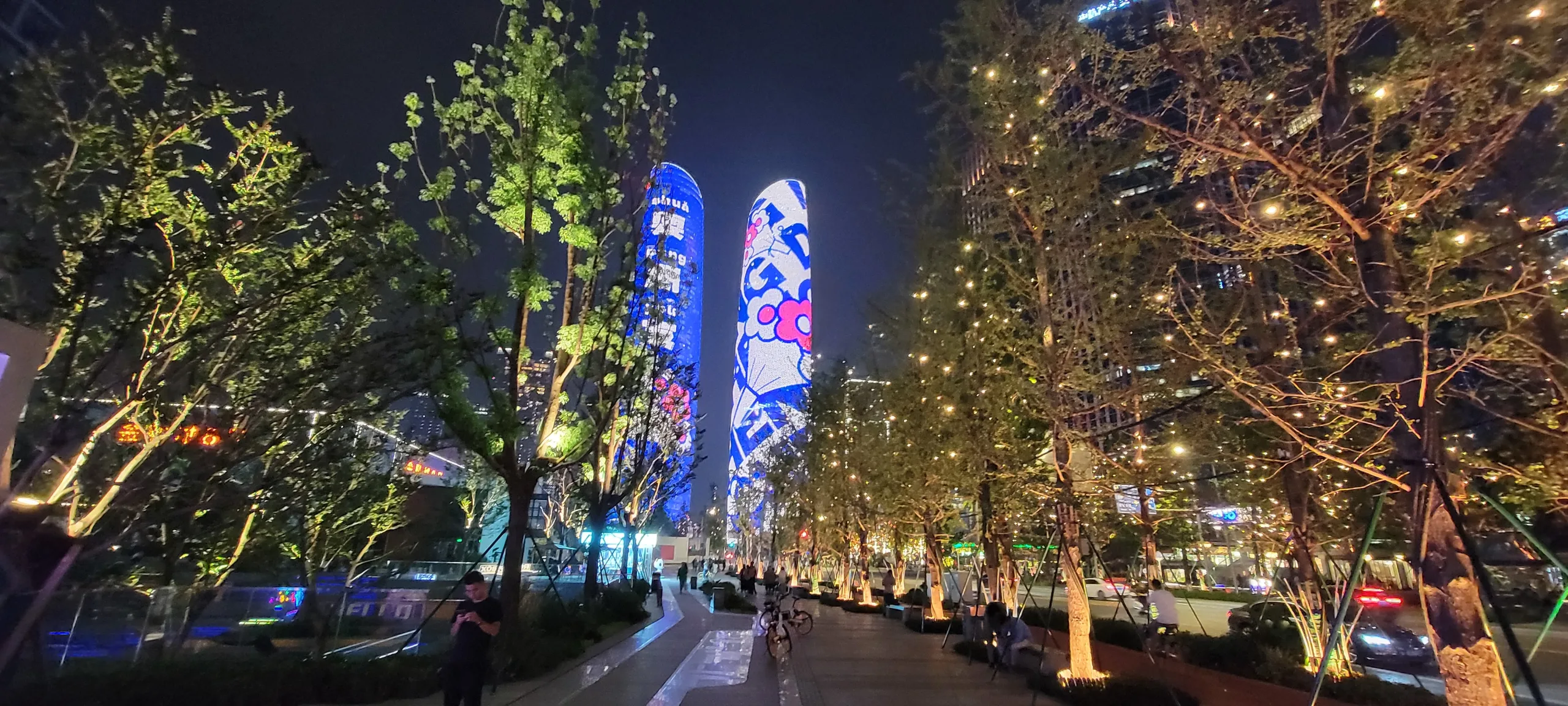
Chengdu at night
This city means business. It is primarily a center for industries like finance and IT. Brandi’s company has an office here, which is why we came. The city is spotless and organized. I walked many places and never felt anything but safe. They have grand avenues of buildings, with every possible need met, from local businesses to shopping and restaurants. We spent several nights in an area packed with food and other leisure venues. We found an incredible jazz club that rivals any we have been to. You can walk around town by walking, taking the subway, or using a ride service. Every car we hired was brand new, and most were electric. Didi is the app used for ride service, and it works great.
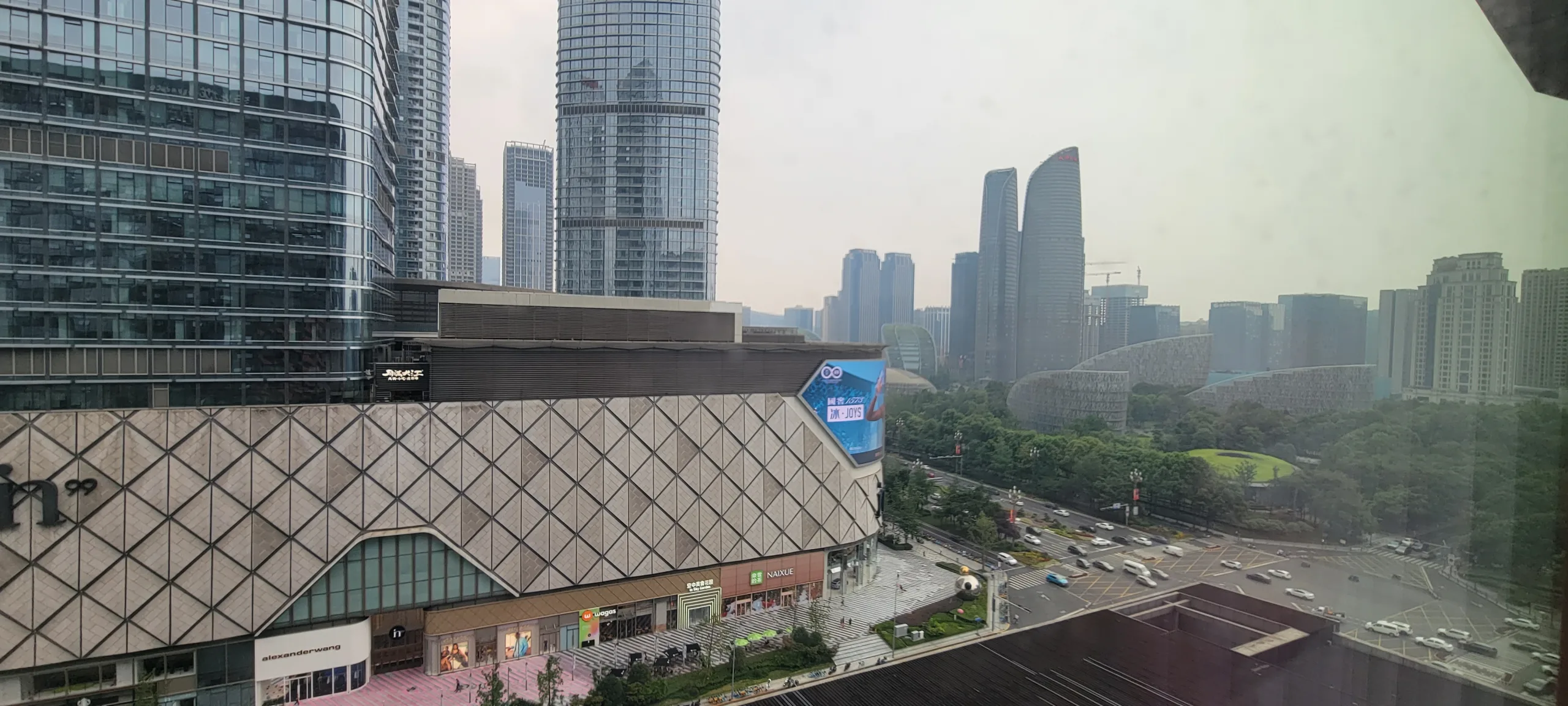
Shopping mall and a very small portion of the city
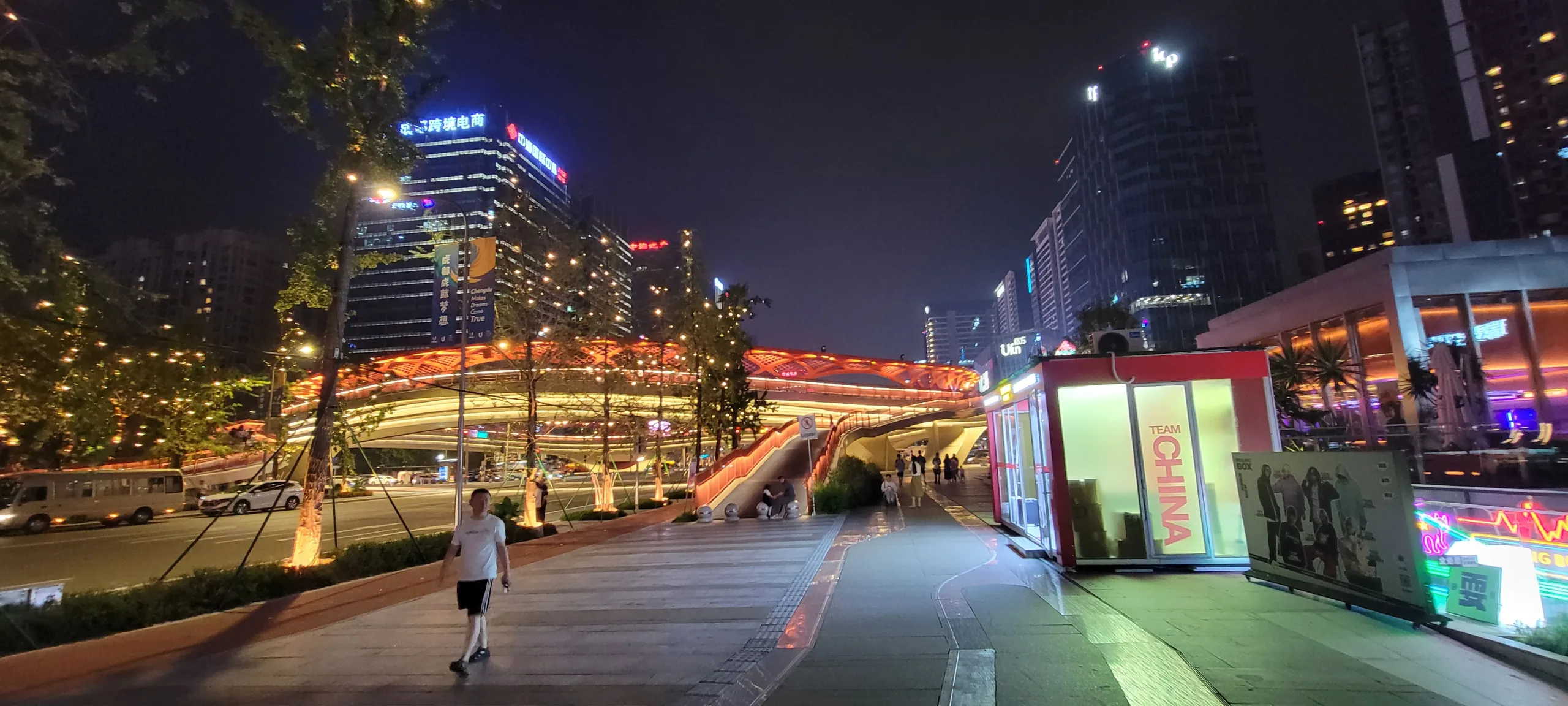
Large pedestrian overpass
Now, it is time to mention the food. Xi’an has some good food, but this is the home of Sichuan cuisine. Typical Chinese food in the US is not authentic Chinese cuisine. The food here is outstanding. These are flavors that you will not get in the US. There are so many different dishes that it is overwhelming. Luckily, we had Brandi’s co-workers who went out and helped with the ordering. Again, if you don’t speak Mandarin, you cannot talk to them to order, so you must translate it yourself, point, and take a chance. Remember when I said China is a Traveler-level Expert? The food is part of it. You have to be open to trying whatever you find. We love the food portion of our travels the most. So much good food here!
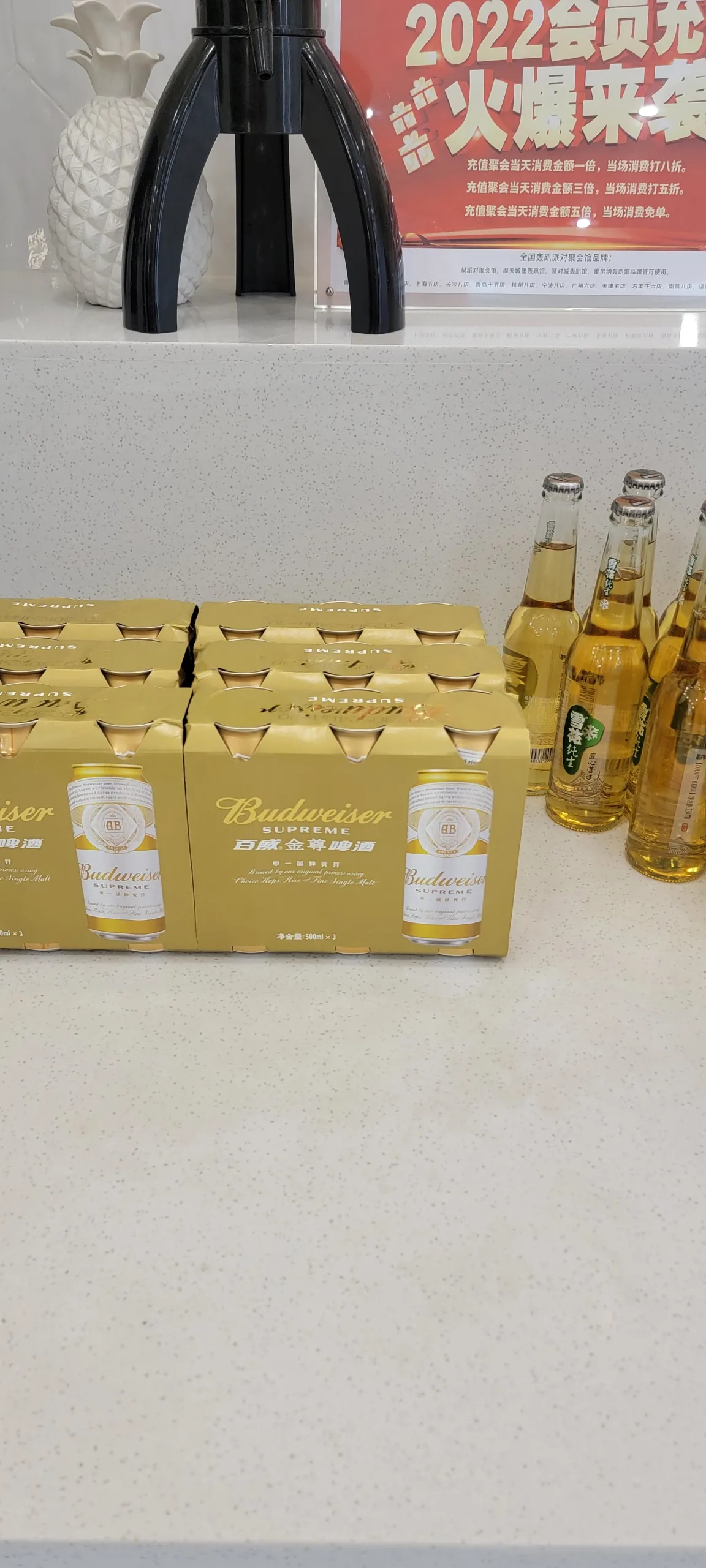
Only the best
Brandi’s Solo Trip
Before we traveled to China together, Brandi had been to Chengdu for 16 days. Staying for such an extended period meant Brandi got to have some incredible experiences that we did not have time for on our joint trip. Here is a little bit about her solo trip.
In the center of Chengdu is an amazing square called Tianfu Square. This square was built to showcase China’s strength and pay homage to its great leader, Mao Zedong. There is a giant statue of Mao, flower sculptures, and a history museum. It is a fast train ride to the square, and the train lets out in the middle. It is a great place to people watch, learn about China, eat, and shop.
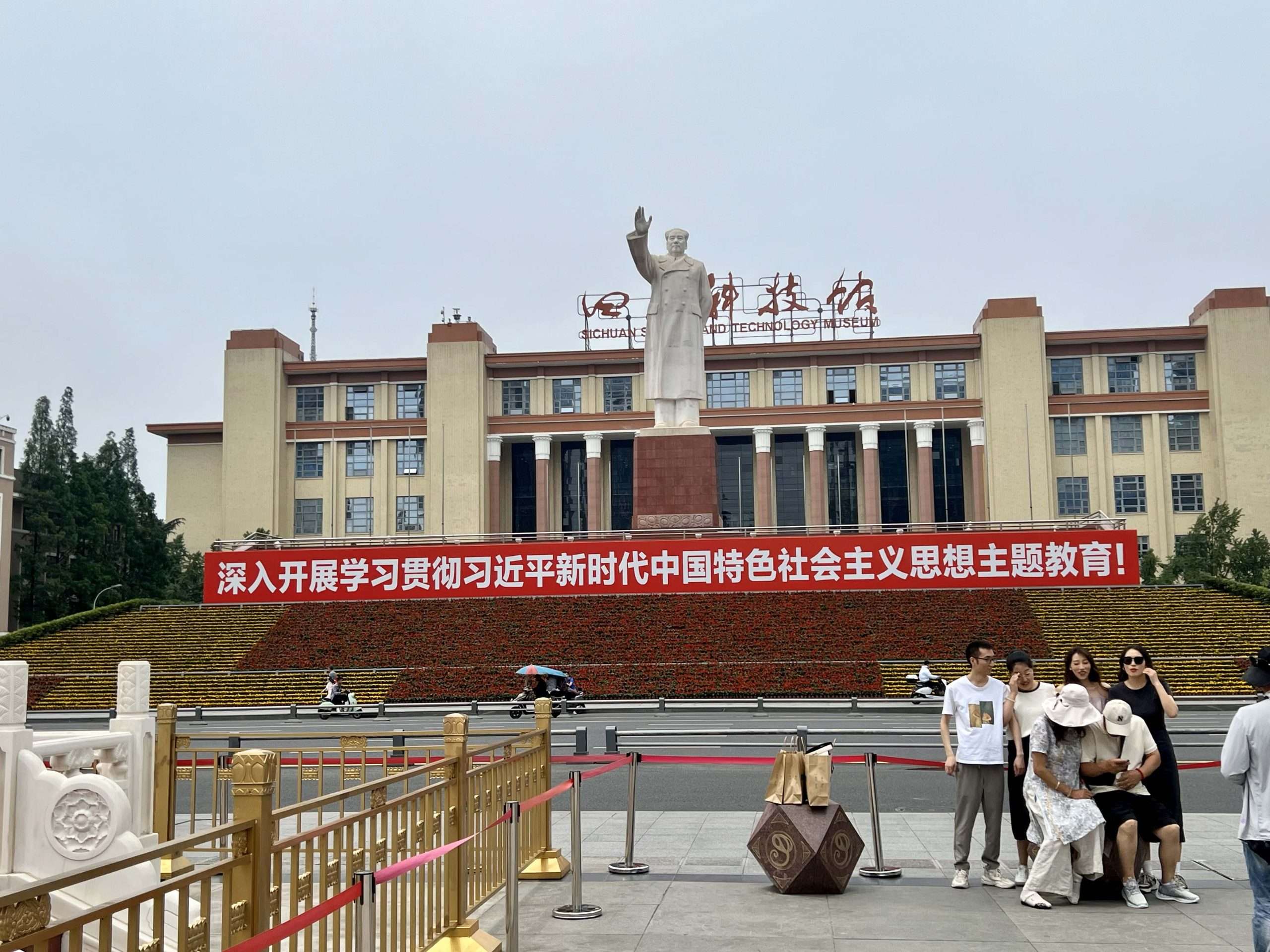
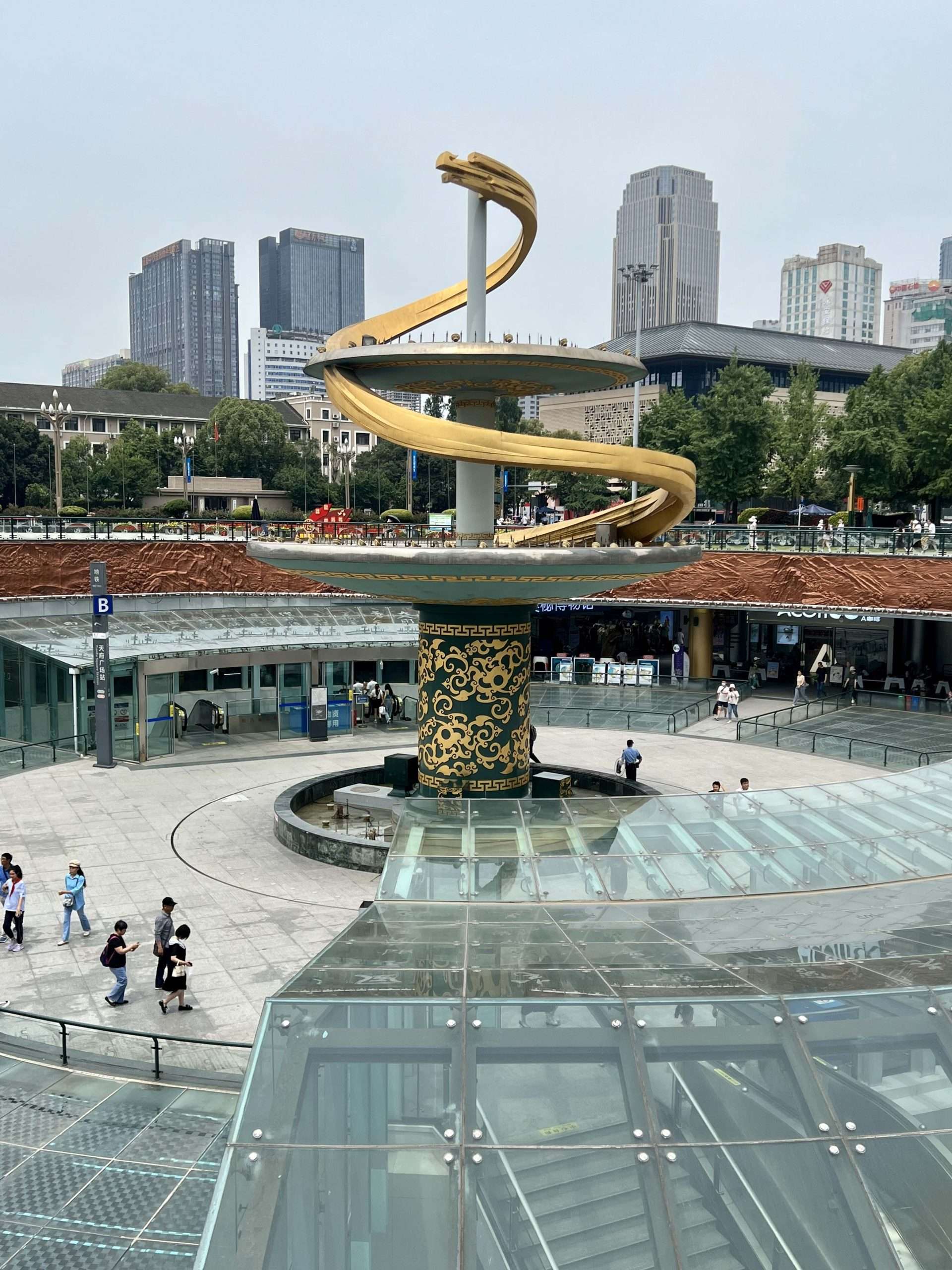
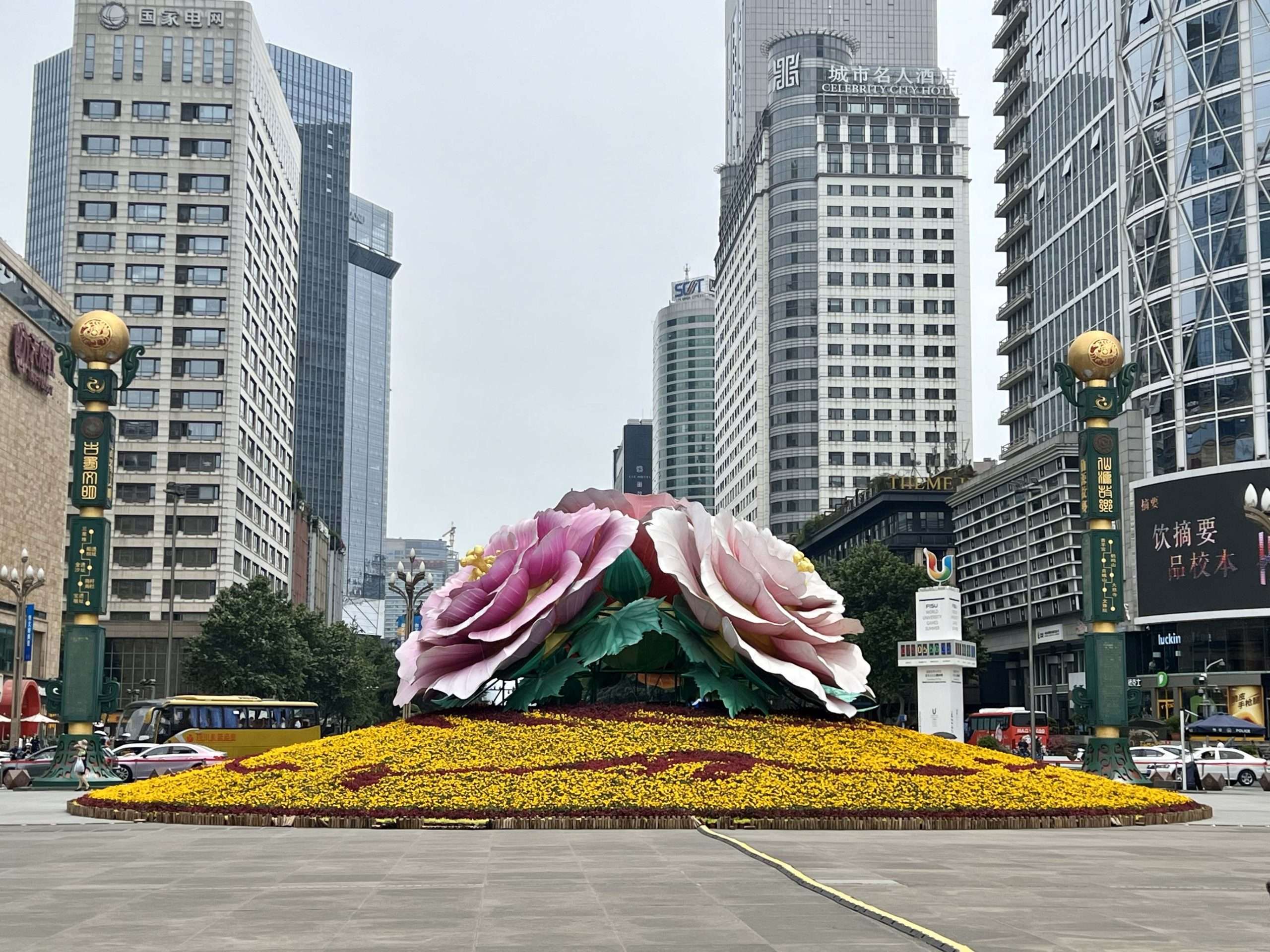
Food, Lanterns, and Opera
There are many famous tourist locations in Chengdu, but Brandi’s favorite was Jinli Street, also known as the Red Lantern District. You enter the crowded street through a beautiful and tranquil park, but soon, you find yourself in the chaos of food vendors and shops. People line the street to try the local delicacies, and the lanterns make for beautiful pictures.
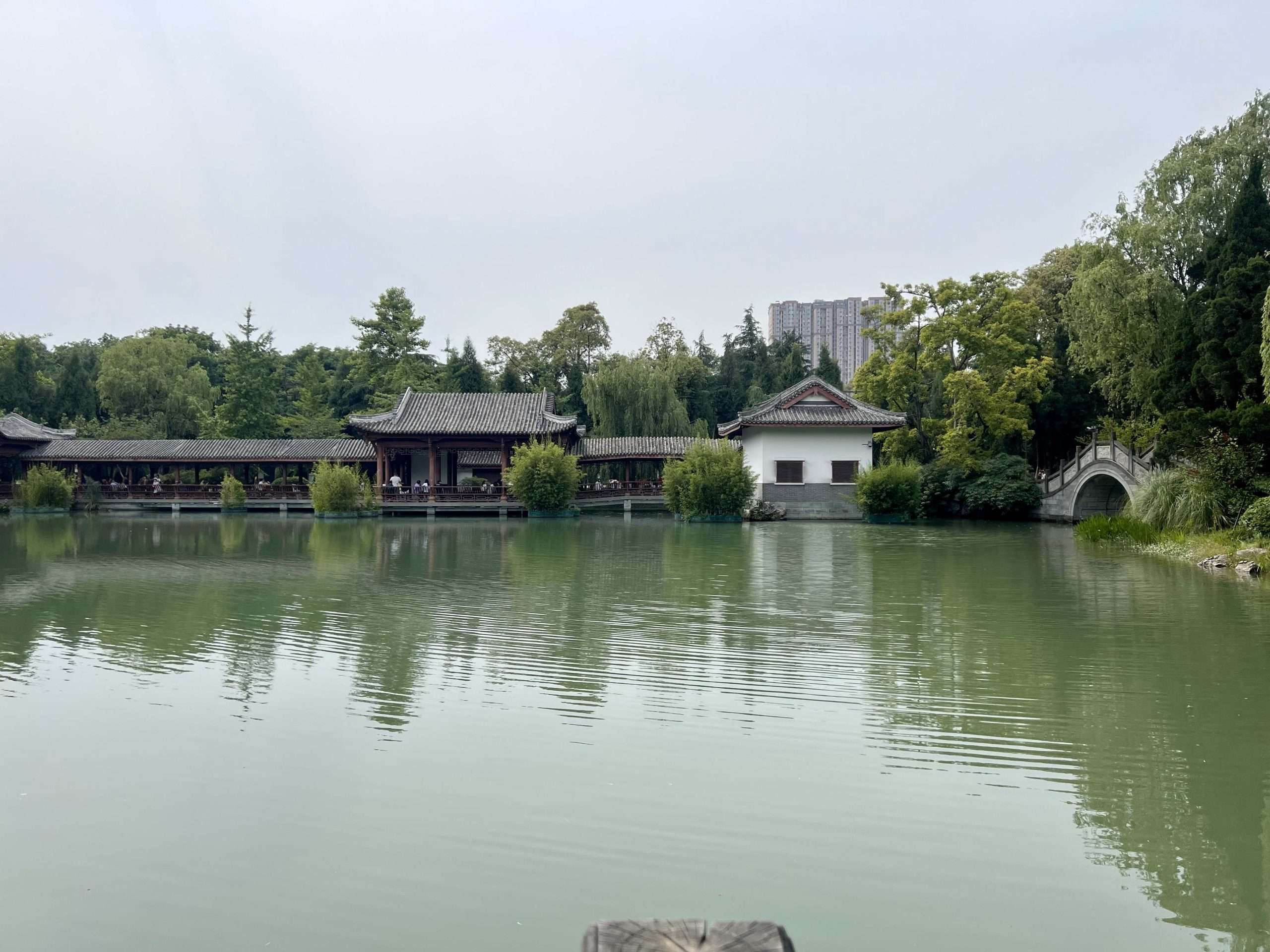
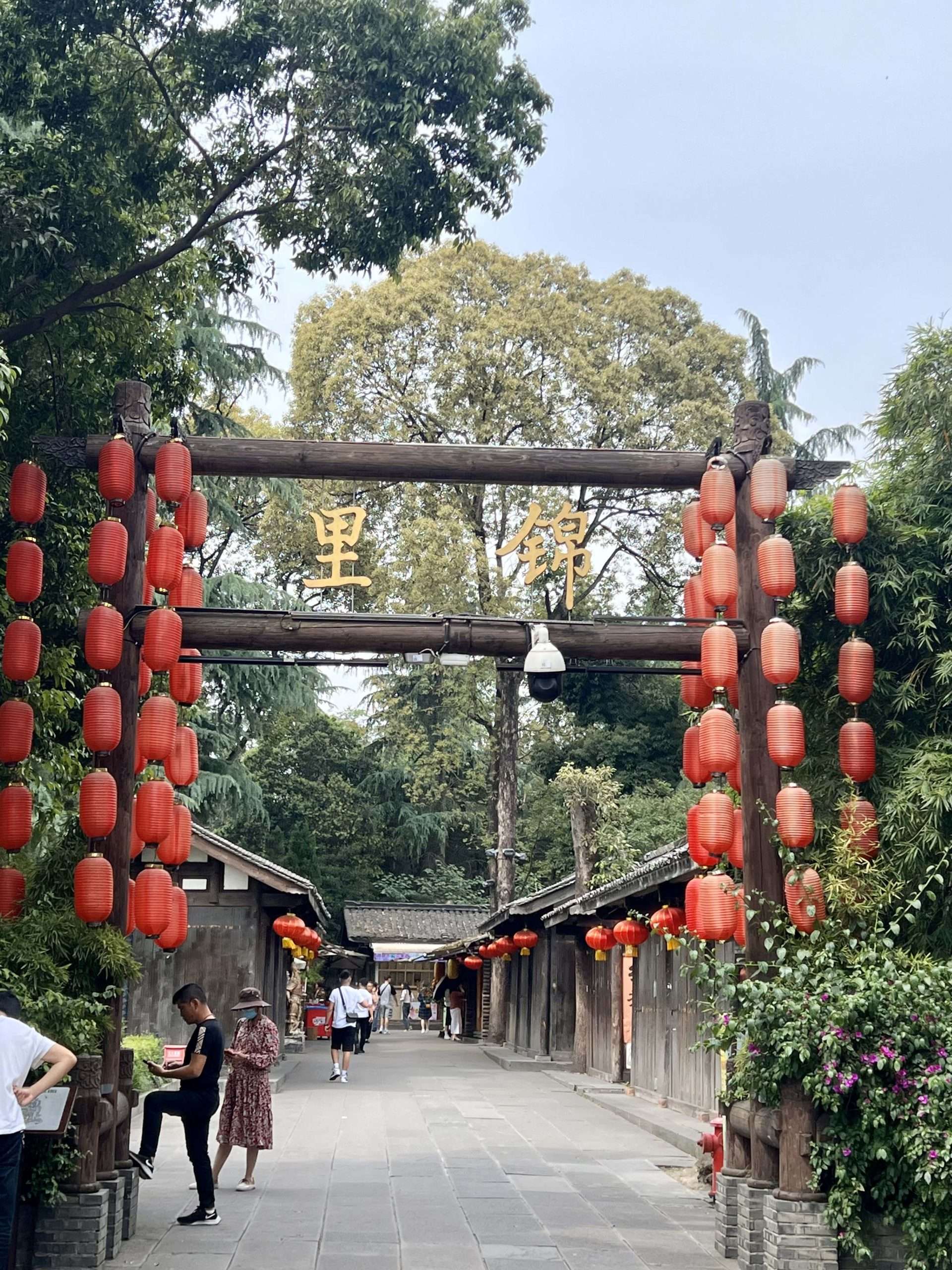
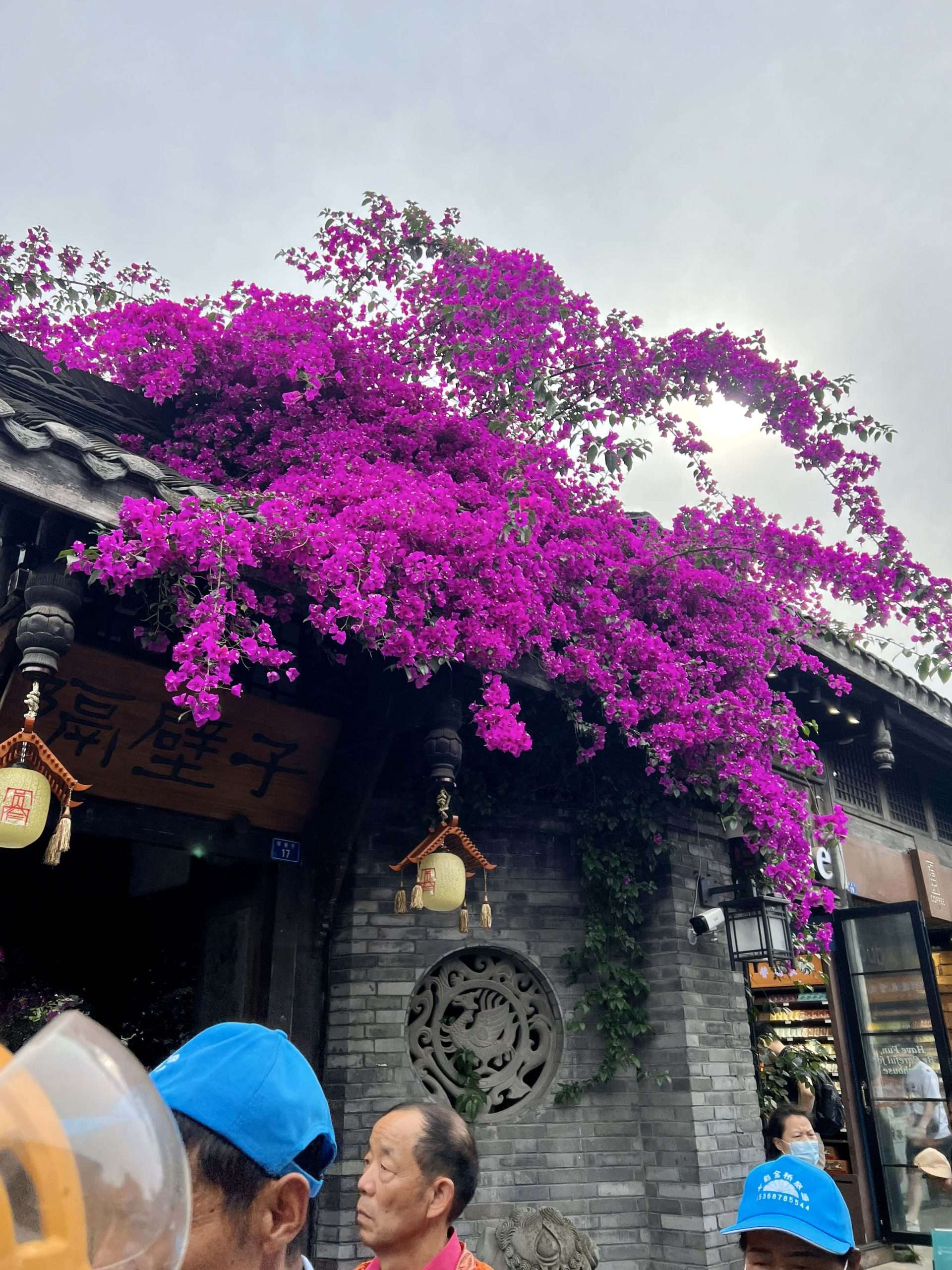
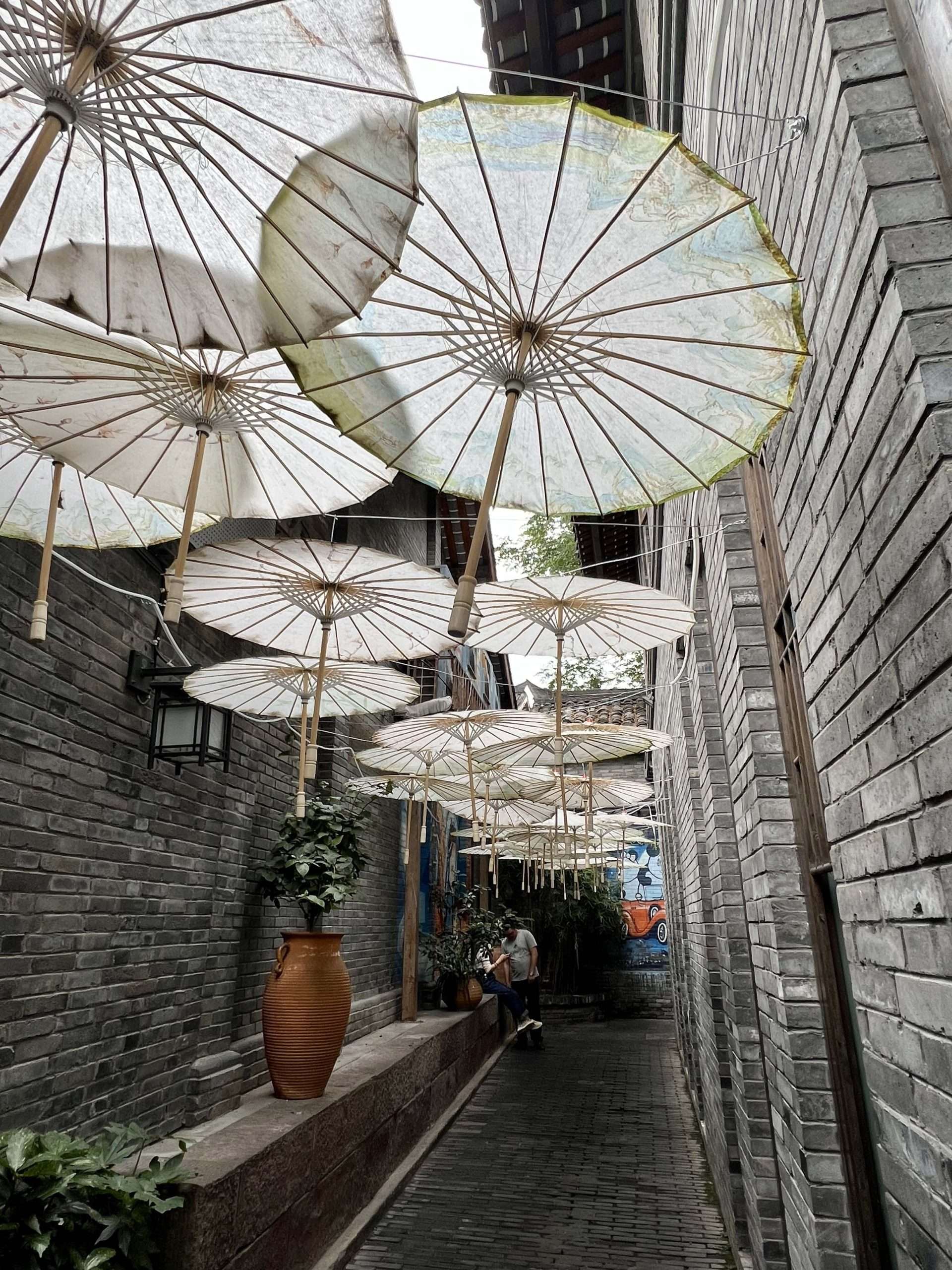
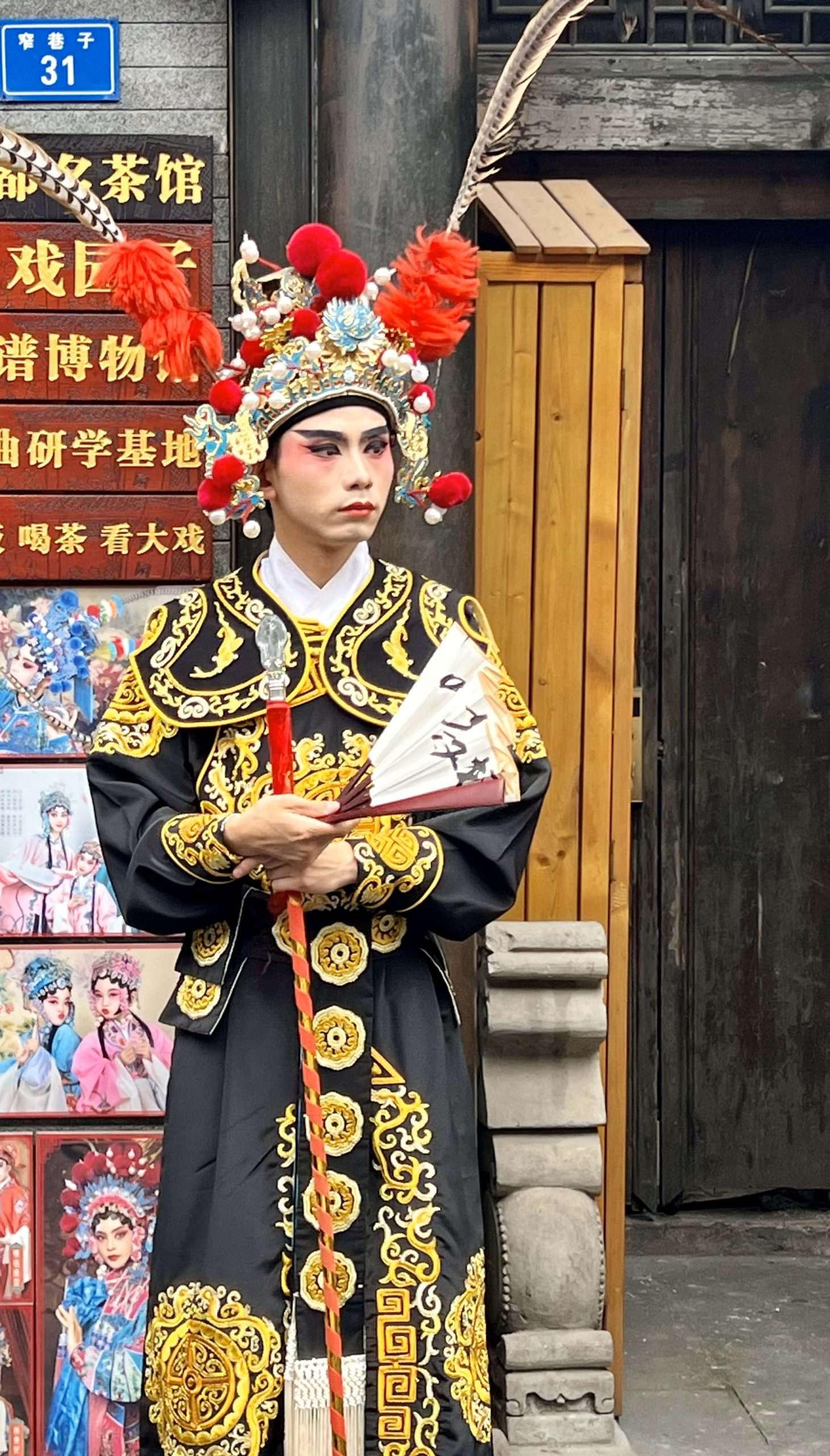
Jinli has amazing food but is also well known for its Chinese opera. This is no ordinary opera. It is a series of acts, from dancing to tea pouring and the extremely famous Bian Li performers. These performers dance while changing through a series of masks. They change masks every few seconds, and it is a complete thrill to watch. For videos, see our YouTube channel.
While at the opera, you can try the most famous food in the Sichuan province: hot pot. As we said above, you must be ready for different types of food, and here is where you must be ready for a food adventure. Most of the food in Chengdu is made up of internal organs. You cook the organs and vegetables in an extremely spicy hot oil at the table and fish them out. It is very delicious. Brandi’s favorite food, believe it or not, is duck blood, but she was out on the pig brain. The brains were very mushy, and the texture of soft tofu, which she did find off-putting.
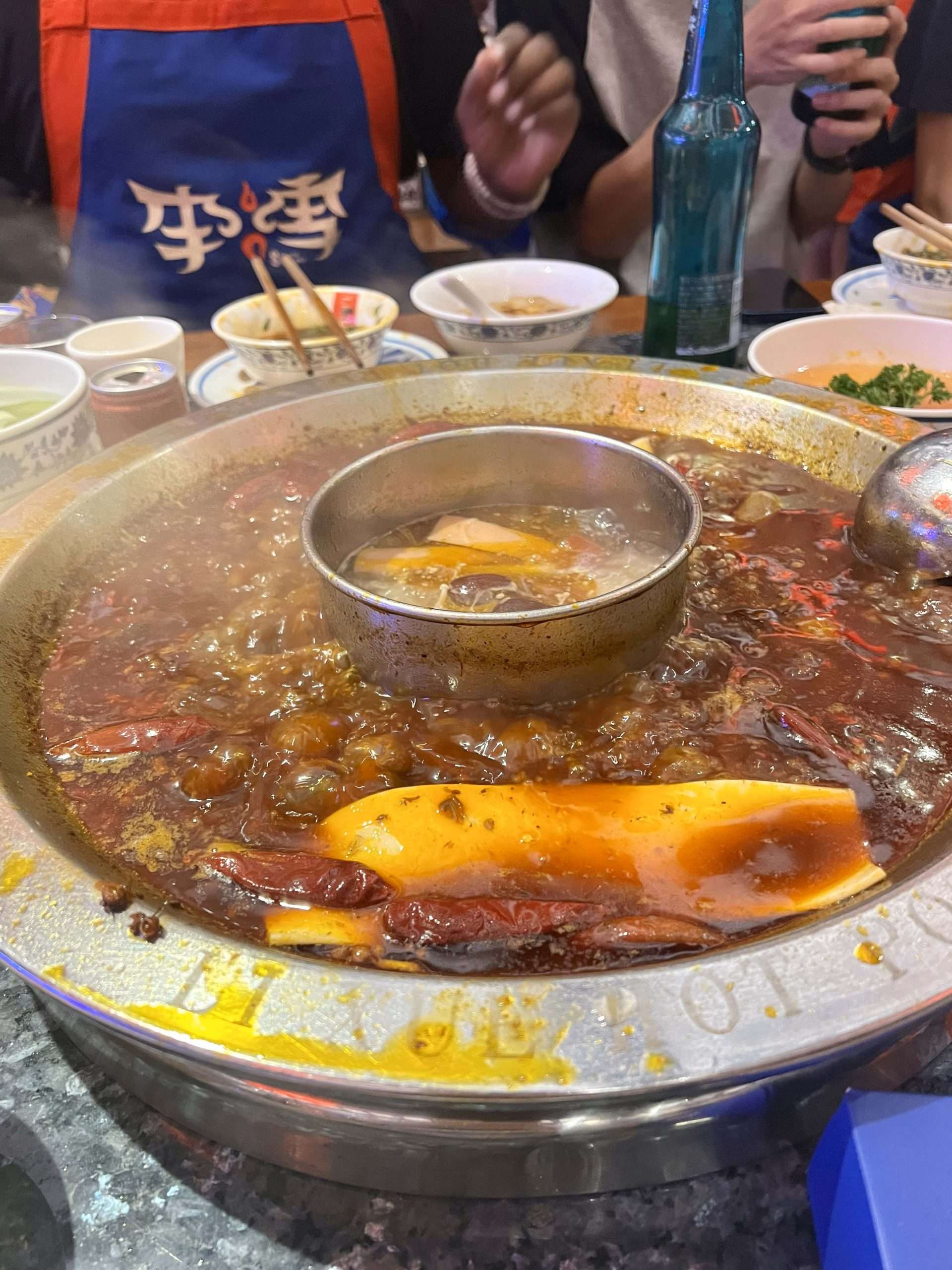
Hot Pot Boiling!!!!!
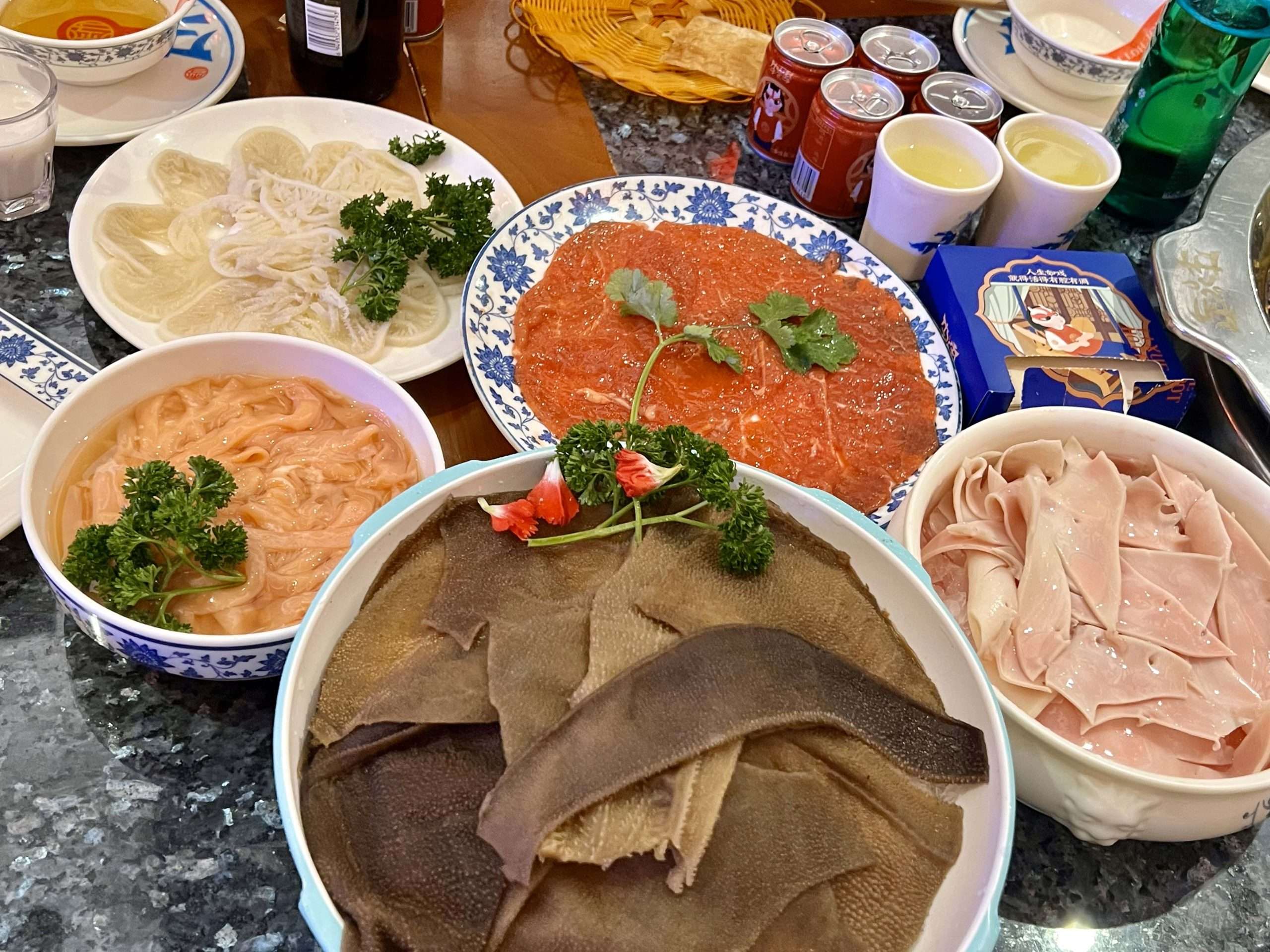
Tongue and intestines
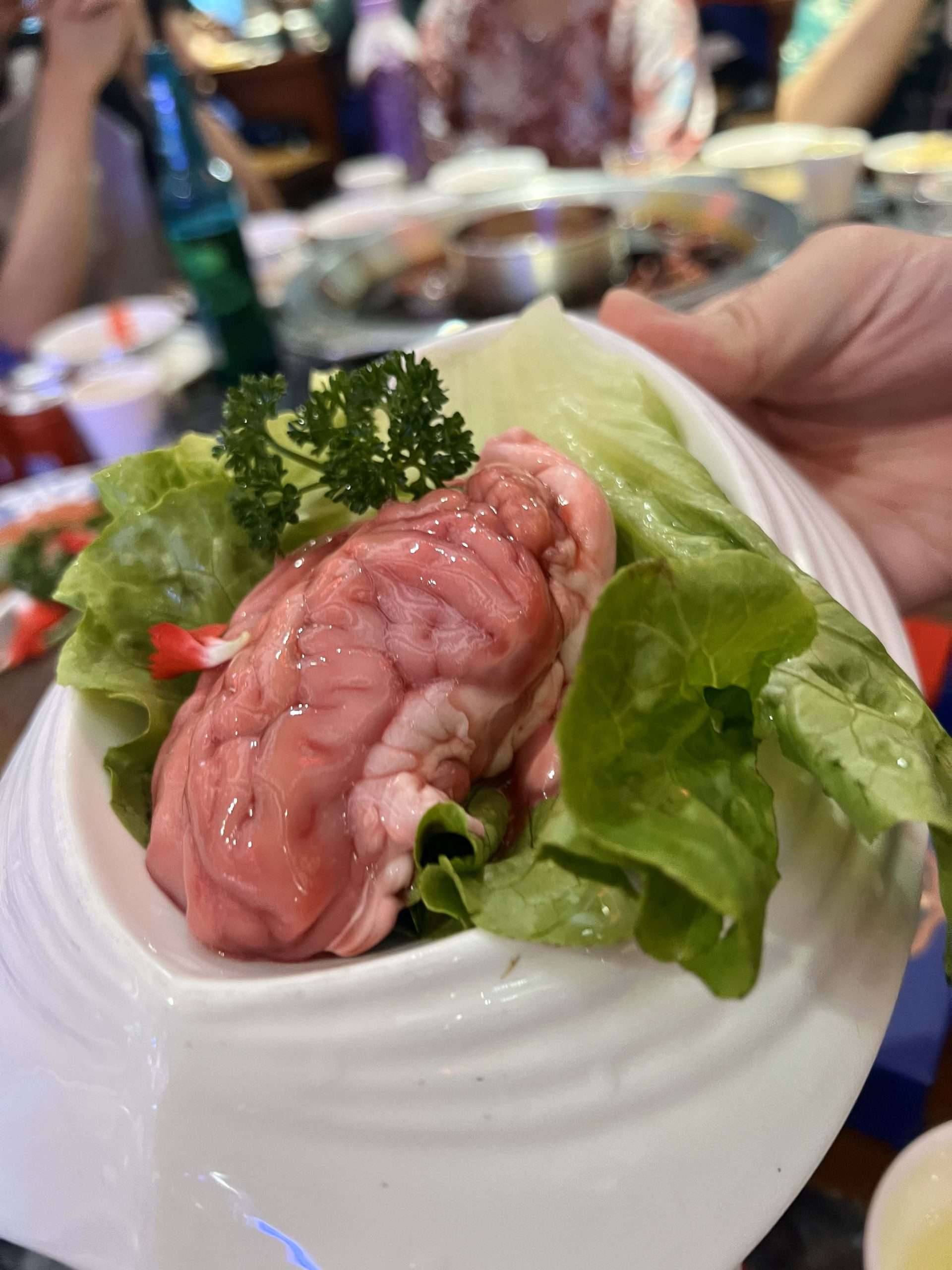
Pig Brains
In China, most people eat family-style at home and in restaurants. Brandi was lucky to be taken to a top restaurant in Chengdu by her coworkers, where she experienced some incredible Sichuan dishes such as Mapo Tofu. Most of the dinner had more commonplace meat and vegetables, but there was one standout dish that was a must-try but also a bit terrifying: turtle. Brandi said it was delicious but hard to get past the shell and the feet!
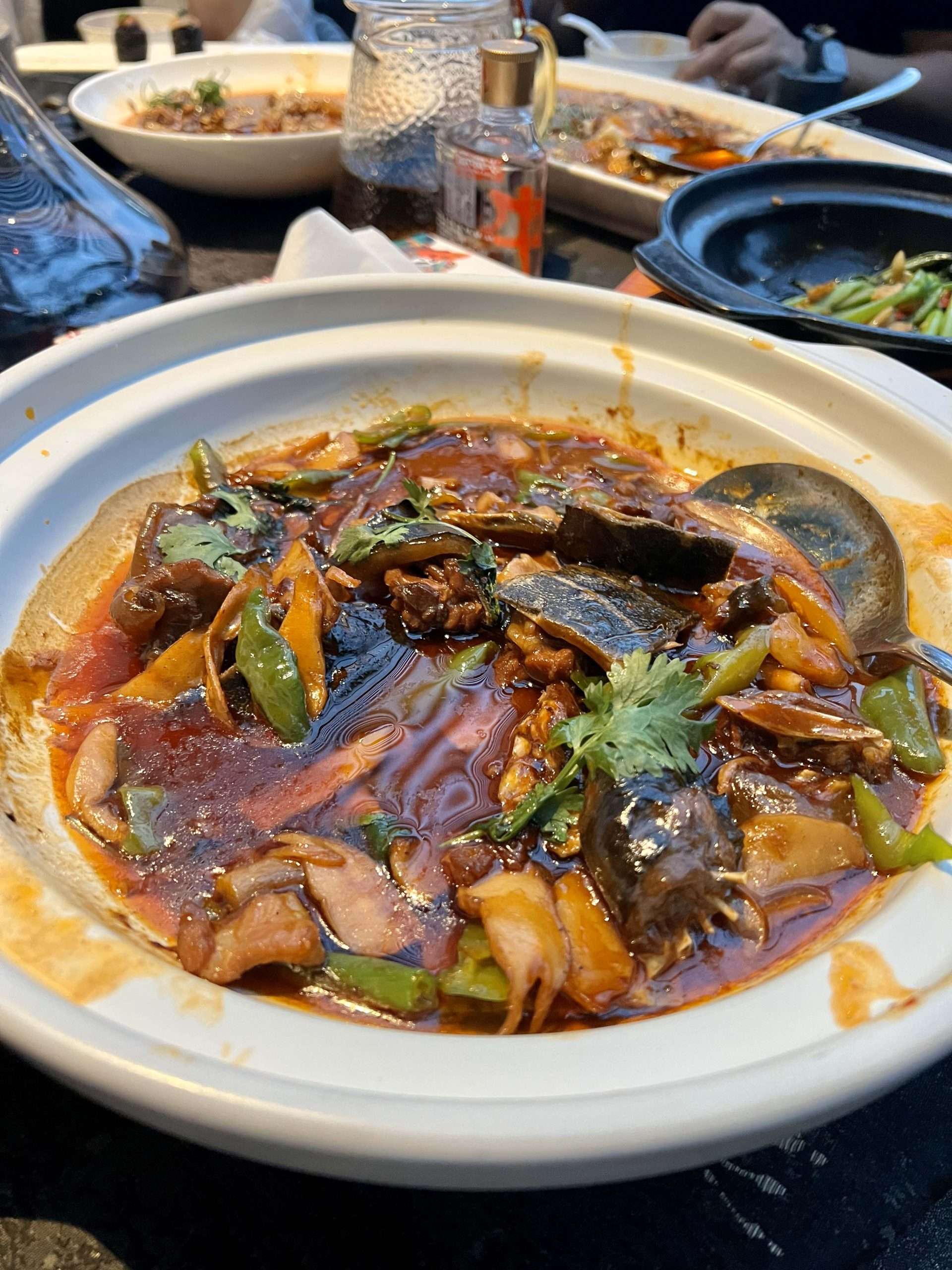
Can you spot the turtle foot??
The real “treat” of Chengdu
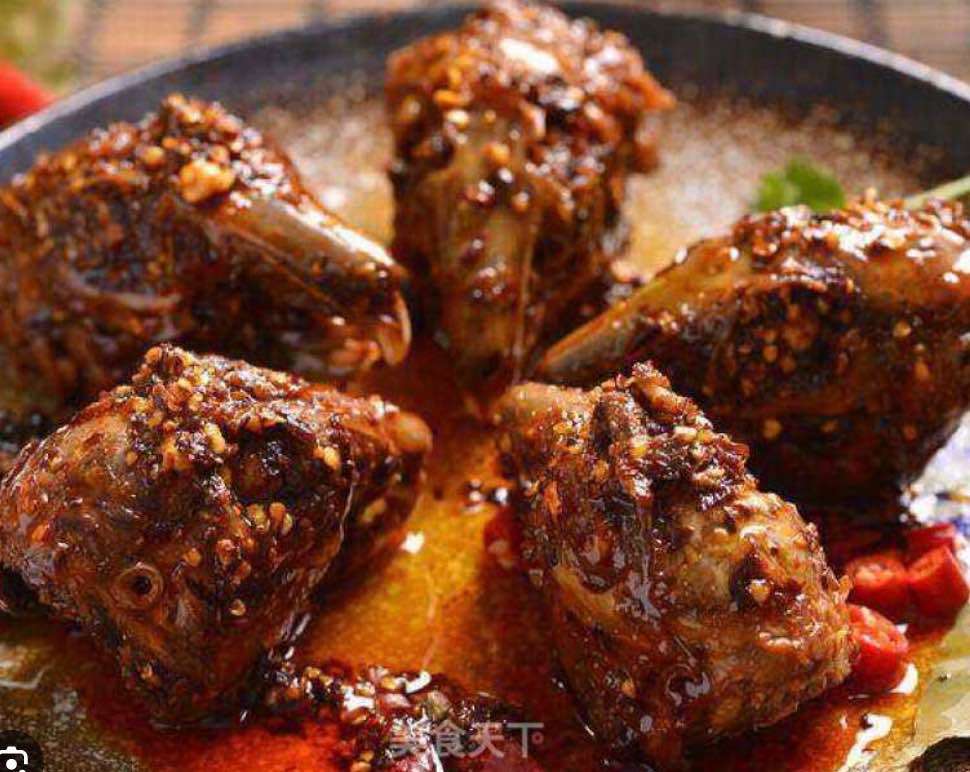
Rabbit heads are the most popular street food in Chengdu and other Sichuan areas. This is unsettling to see and the place where Brandi’s adventure stopped. The heads are deep-fried in oil. To eat them, you crack open the head by putting your fingers in its mouth and rip it open. Once it is open, you can dine on the cheeks and eyes. Brandi finally worked up the courage to eat it after a night of drinking, but by then all the stalls were closed (maybe a blessing in disguise).
The real star of Chengdu, Pandas!
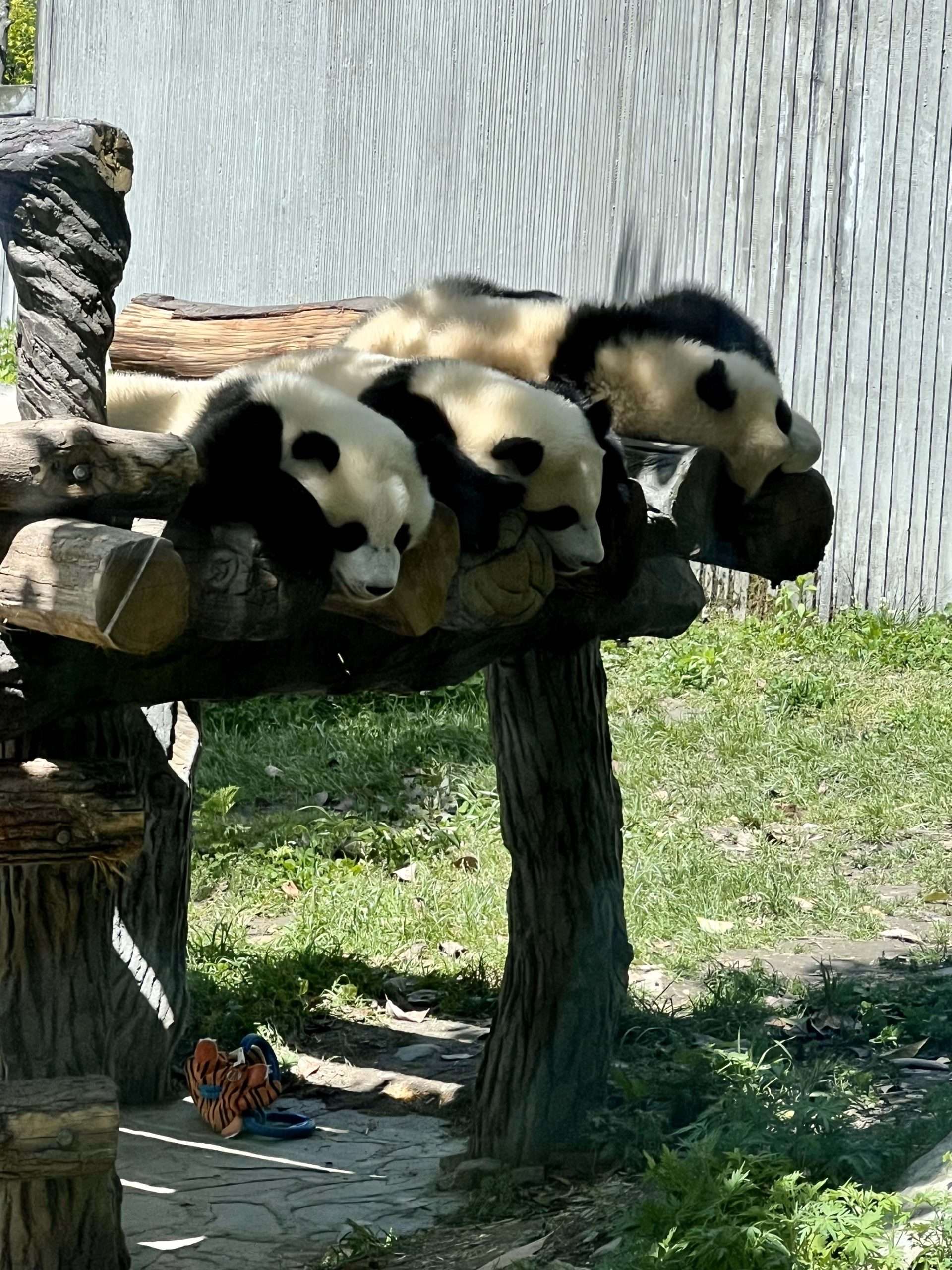
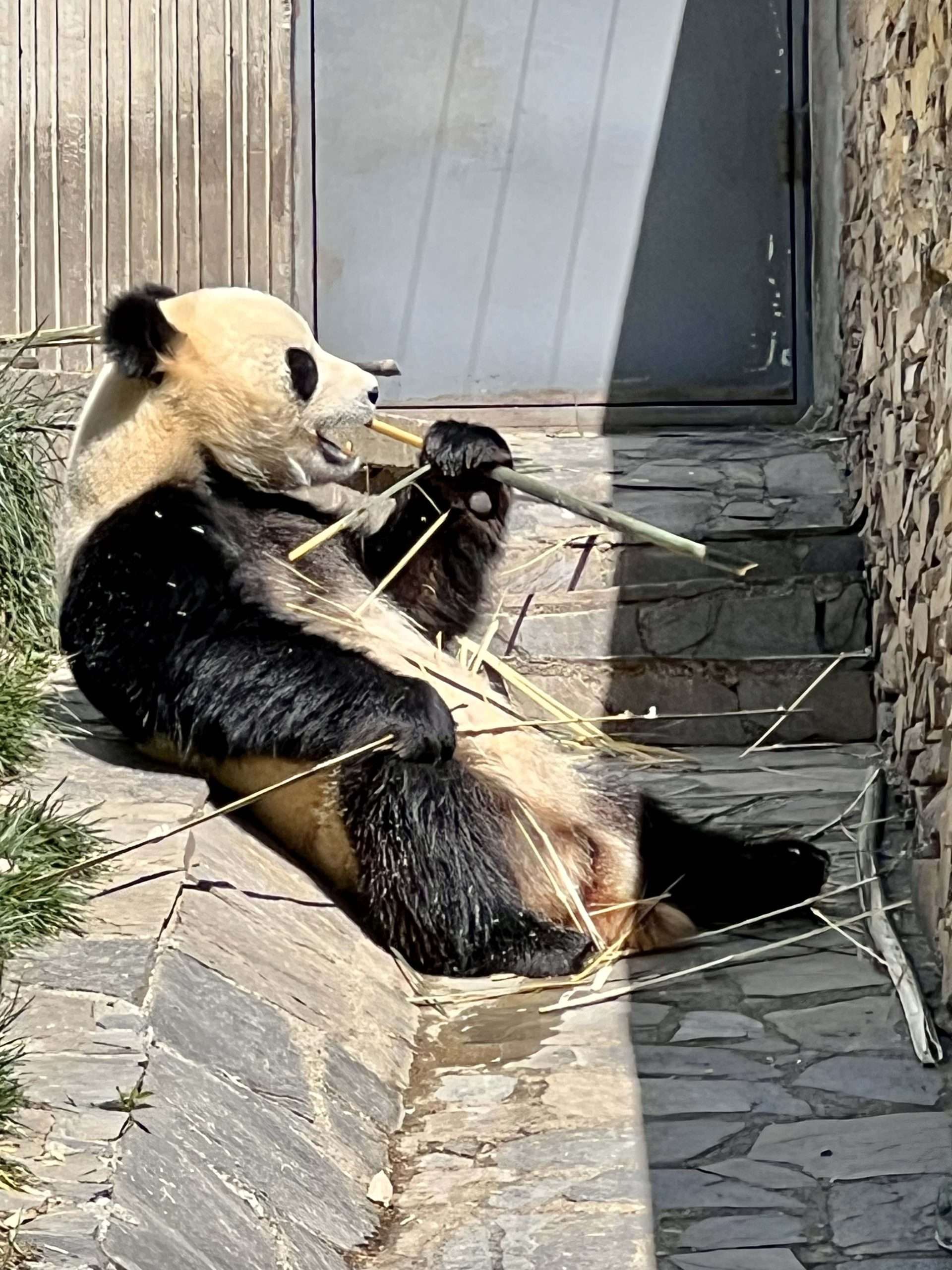
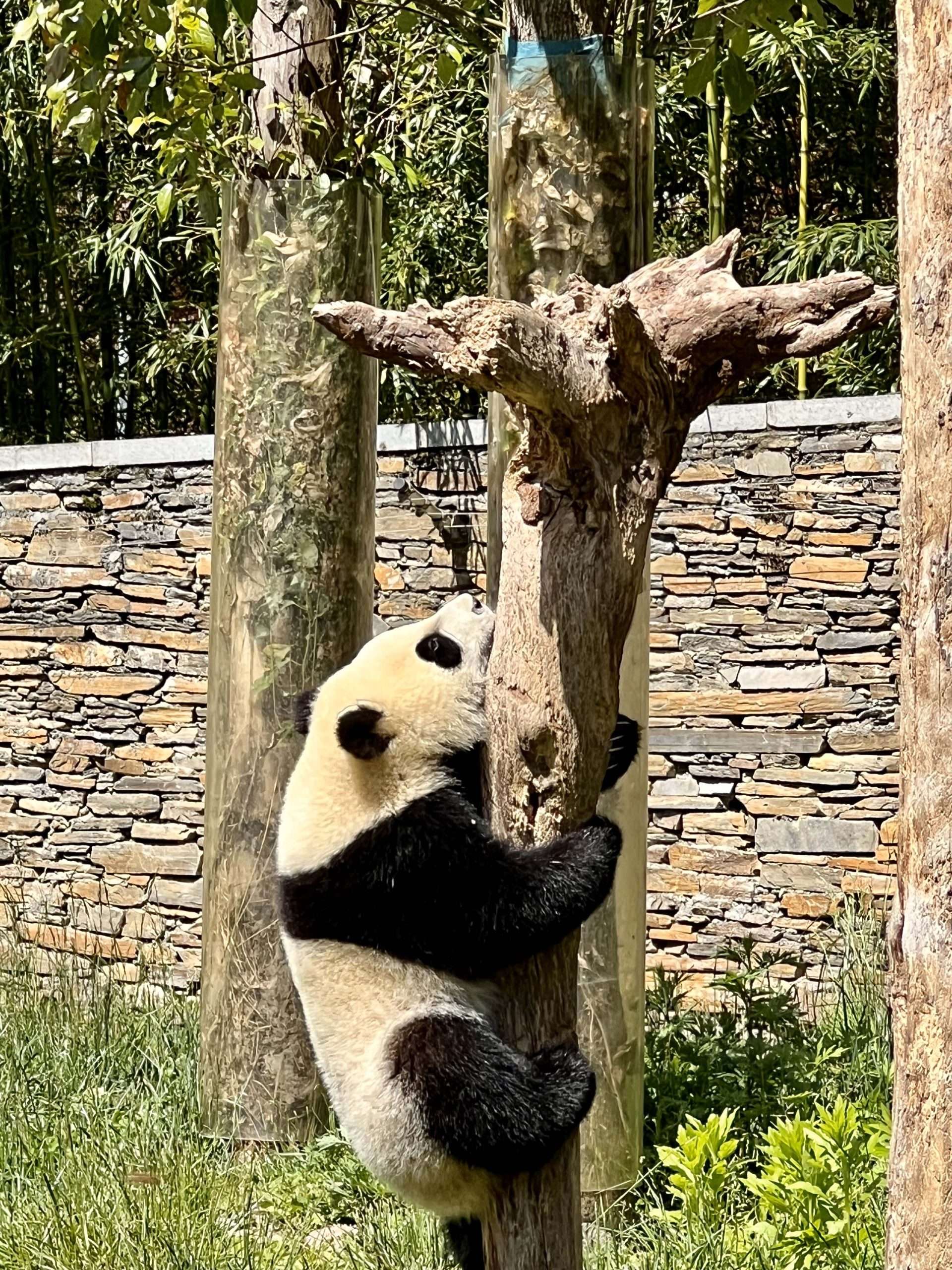
In addition to the food adventures, the best part of Chengdu is the pandas. The surrounding mountains outside of Chengdu are home to pandas. Chengdu has multiple facilities where you can visit pandas. In the center of Chengdu, you can see the famous panda Ling Ling, but during peak season, the line to see her can be over four hours (she is supposed to bring good luck to all who see her).
The breeding facility is about three hours outside of Chengdu in the mountains. Pandas only recently came off the endangered list, but just barely. Brandi spent a day in the facility as a volunteer where she fed the pandas, cleaned their cages, and spent time with the babies. Unfortunately, there is no snuggling allowed. It was the experience of a lifetime.
Panda chill
Panda eat
Panda climb
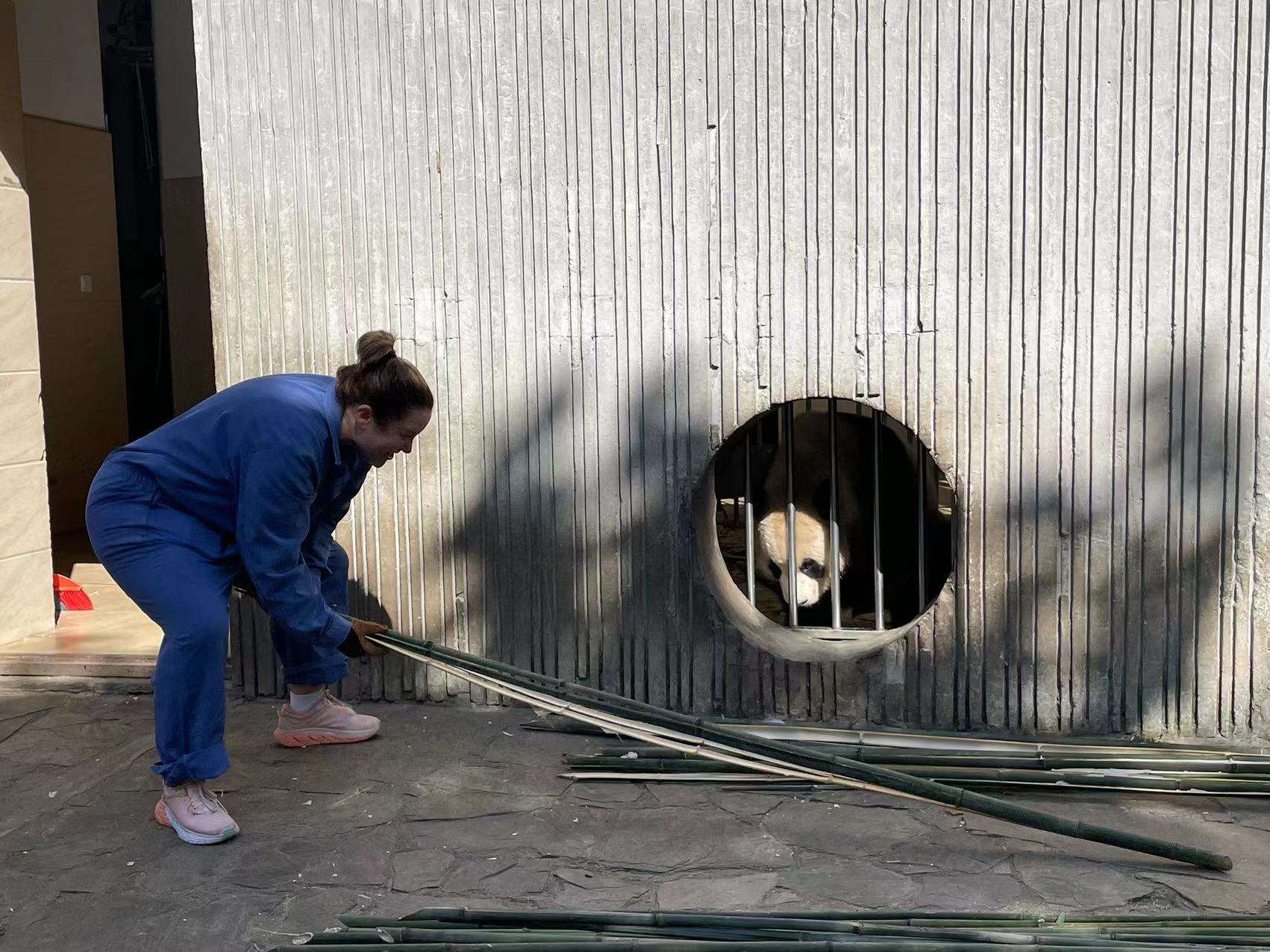
Brandi showing Pandas how to get bamboo open
Chongqing (chaang-ching)
TRAIN GOES THROUGH BUILDING
Another beautiful train ride took us to our final destination. Work was over, and this was for wandering. Chongqing has a population of 31 million. The city was built next to the Yangtze River and over several smaller mountains and valleys, but has large mountains on three sides. It is a bit more aged and rustic in some areas. The city has a large business district with skyscrapers and LED lights that flash and show movies to put on a show at night. On our first day here, we wandered around and went into shops and restaurants for a bit, but this town is massive and very crowded. We had enough of the chaos and returned to the hotel to relax.
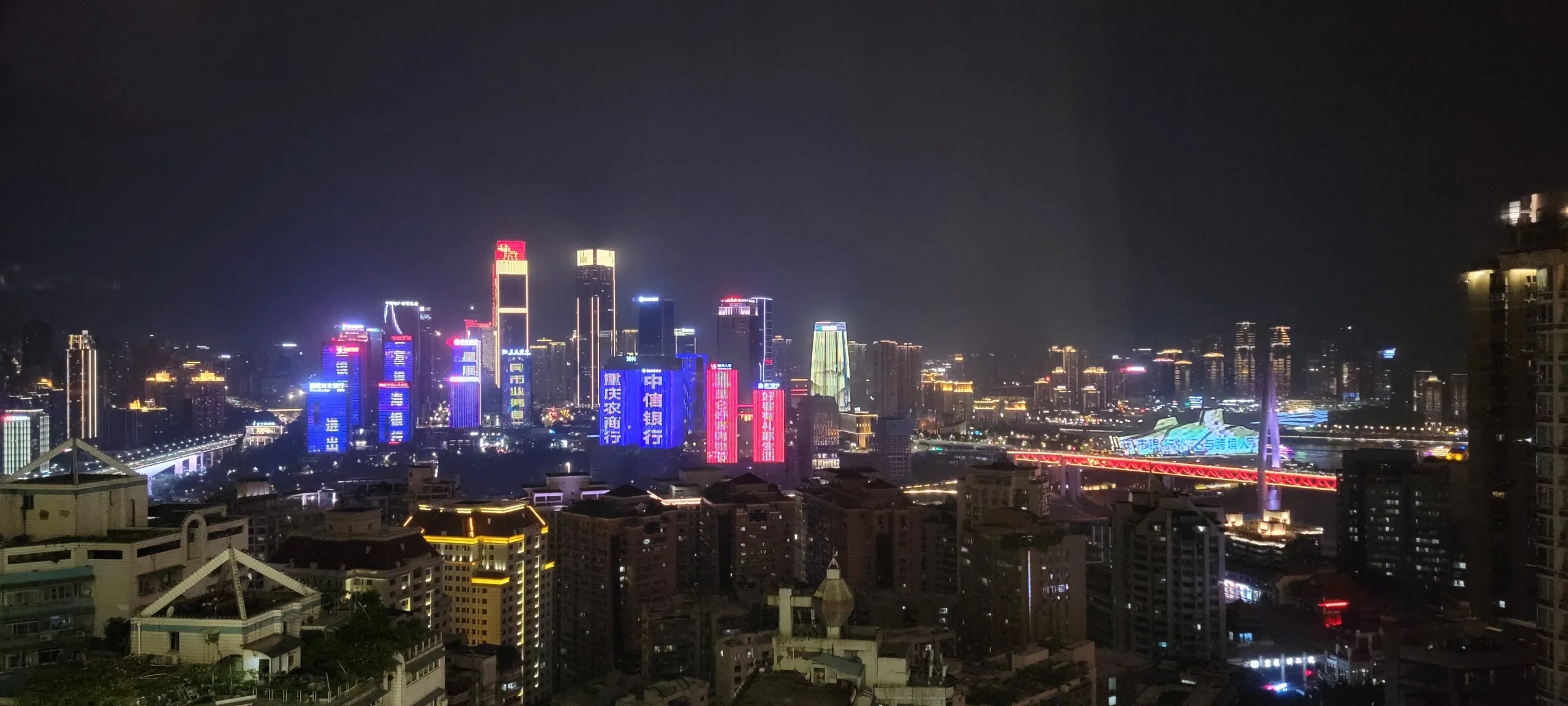
City light show form the hotel room
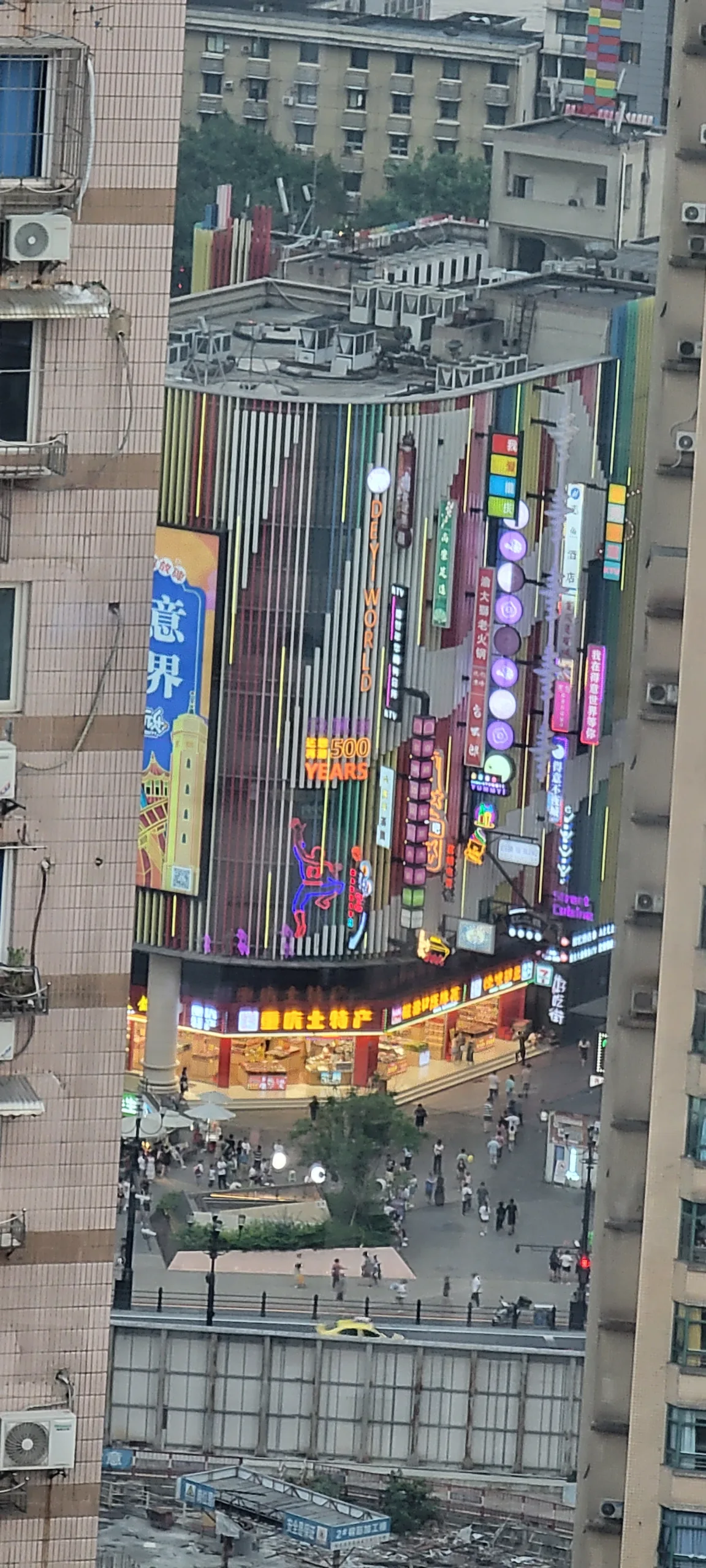
A popular spot for eating and fun
We hired another English-speaking guide, whom we will call Steve. We wanted to see some of the city and a few spots that he suggested that were less touristy. We crossed the river and went to a lovely area on one of the mountain areas, Longmengao Street. It had many levels of made-to-look ancient shops and restaurants and was once the site of an American Embassy during WWII. There is a cable car that crosses the river, but there are only two cars and a very long wait. We just watched it from the riverside. Steve said the town gained its size from many manufacturing plants in the area.
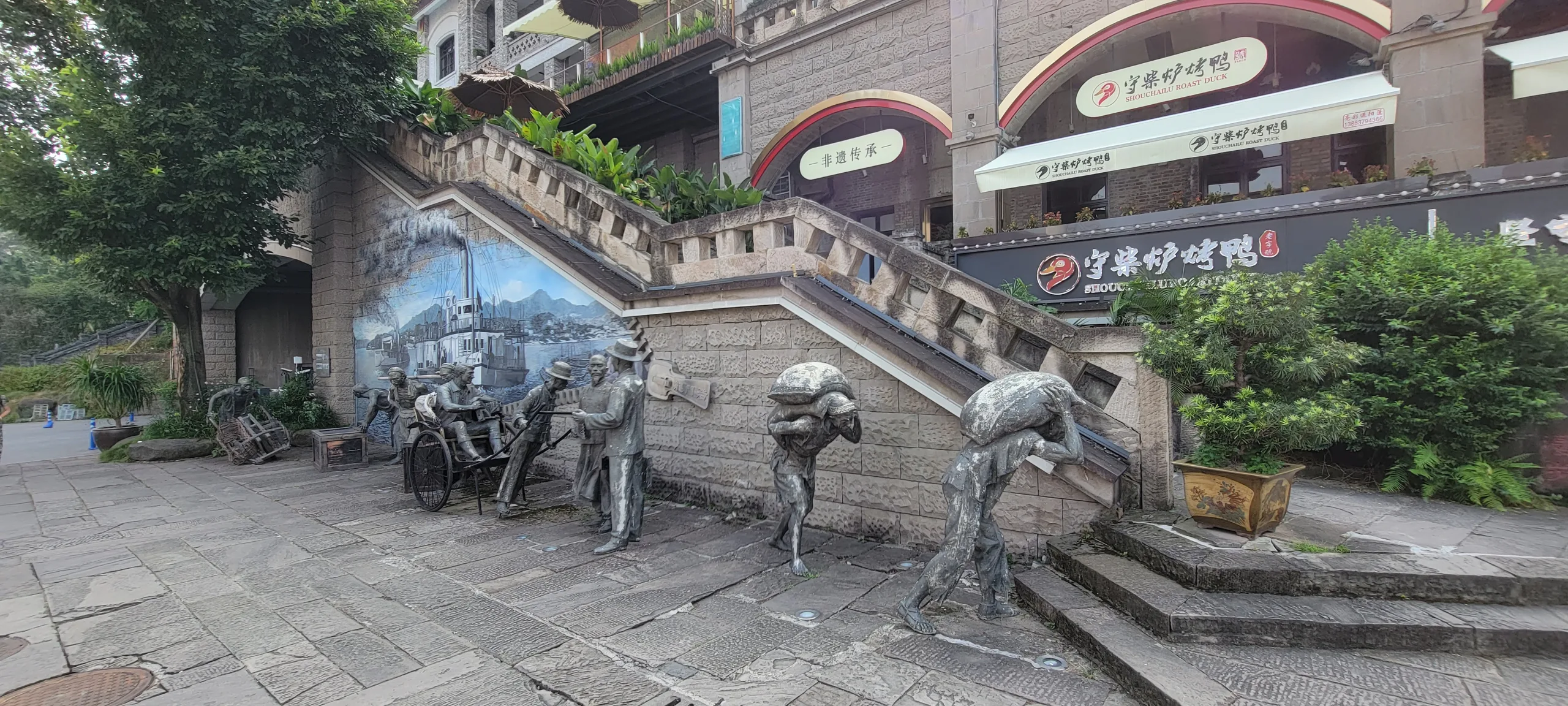
Old walk around area
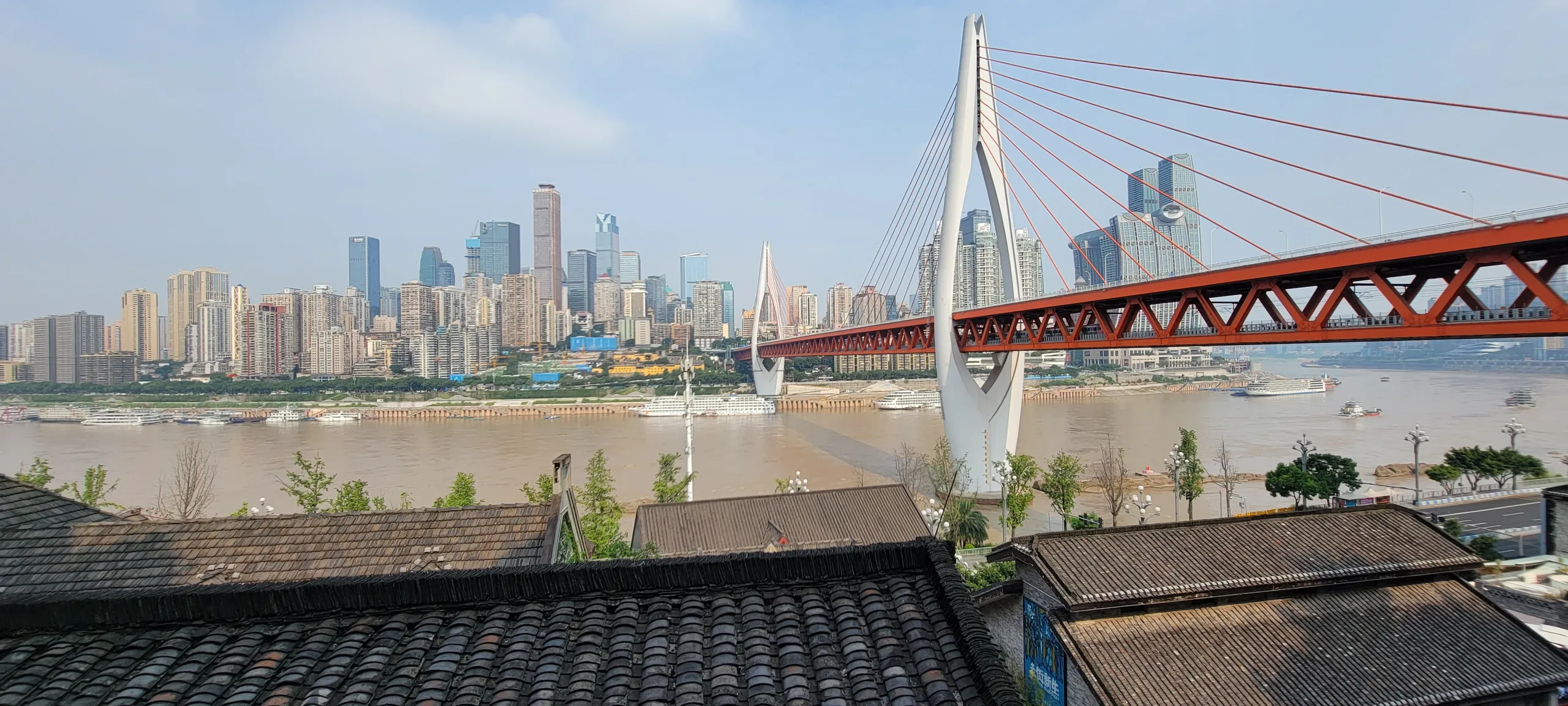
Bridge view and cable car
We went to a museum about Chongqing and enjoyed it. They had excellent historical information, including many pictures and models of the original city. We saw the City Hall, which was massive and had a hotel inside, and went to an area on the river with many old-style shops. The sites and smells were fabulous. Steve took us to a restaurant he likes. We are also now huge fans. We just had him order and said we aren’t scared of anything. It was delicious. A constant part of this trip was the great food. The Yangtze River is the 3rd largest in the world and connects to Shanghai on the east coast. Many cruises on the river look incredible, but we did not have time during this trip to take one.
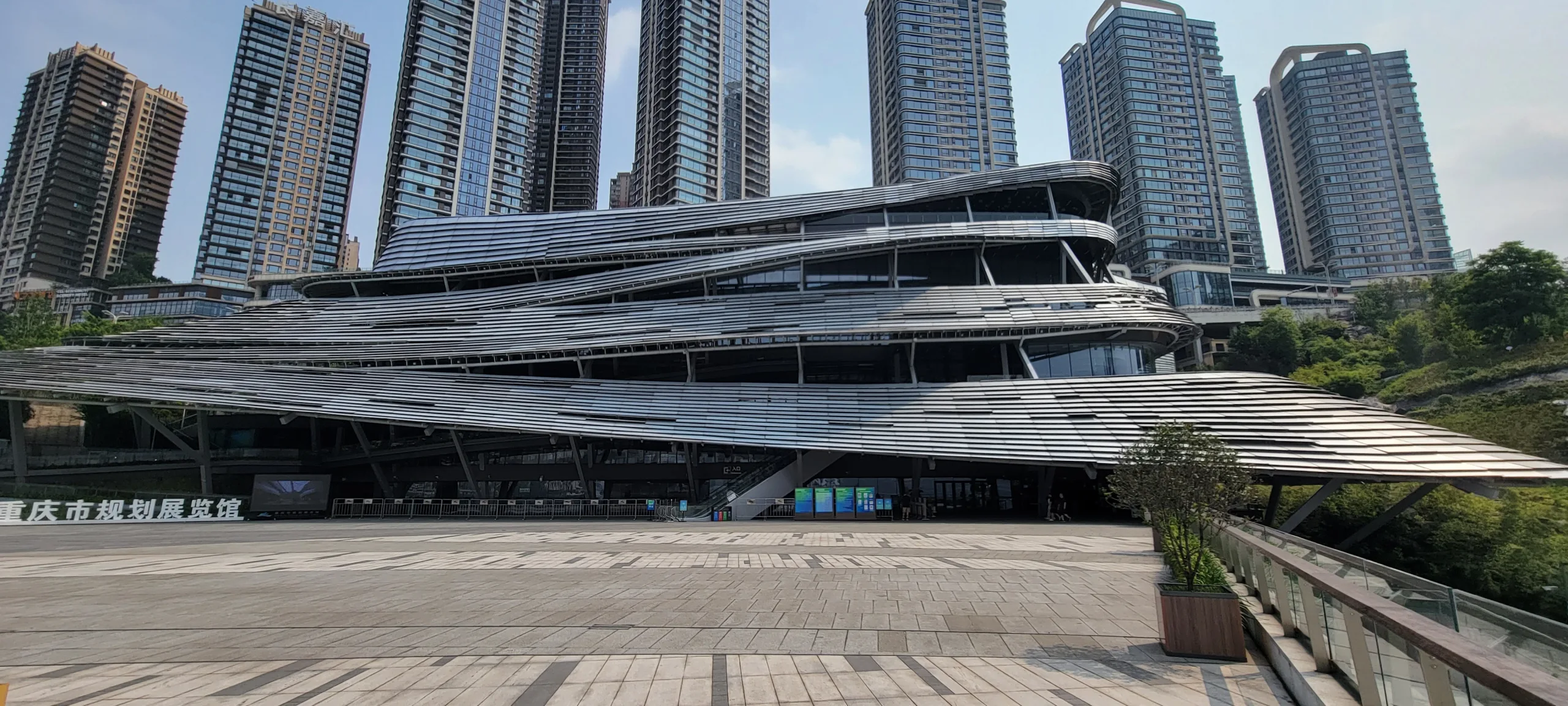
Museum
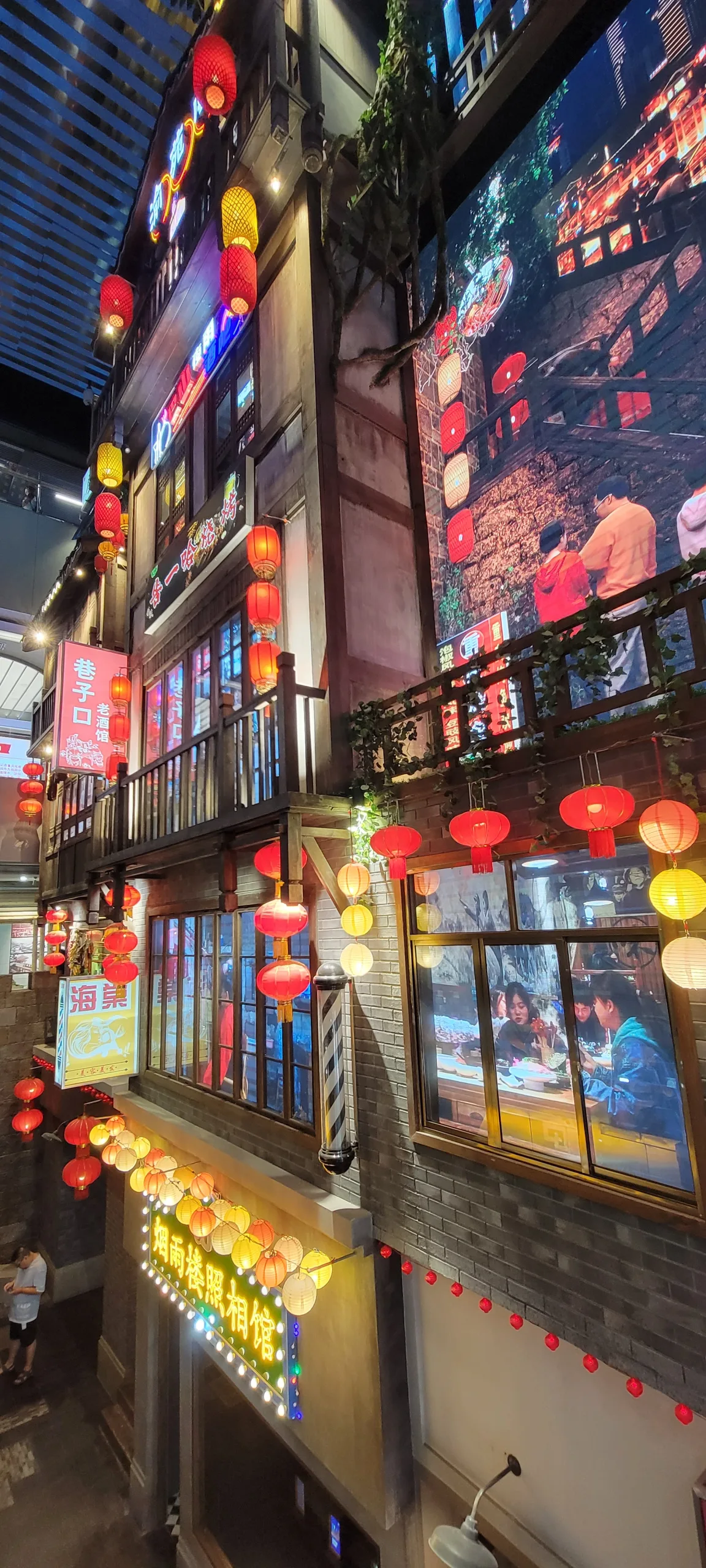
Faux buildings with video screen
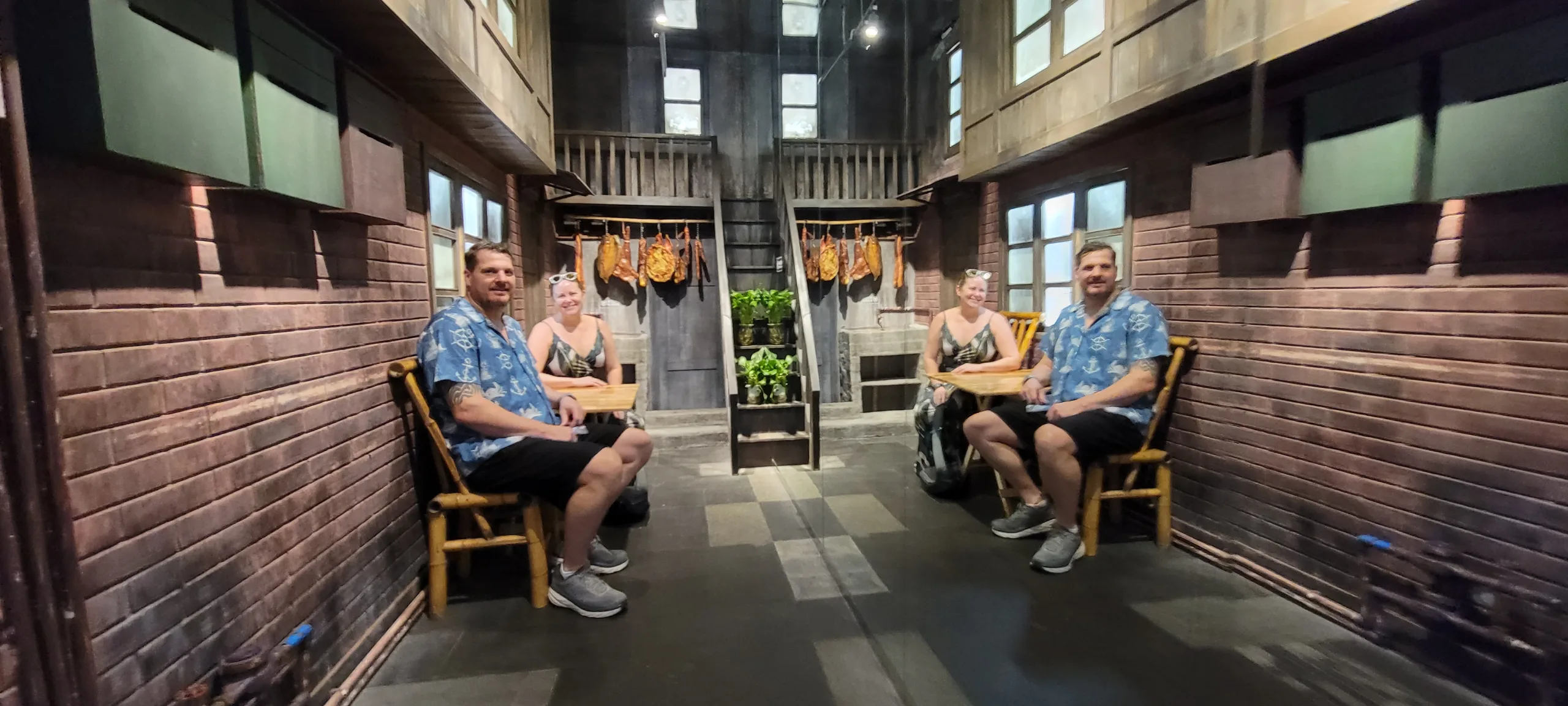
Optical illusion photo in a market setting
Unfortunately, we again saw most of the doors closed and vacant in this area. Steve was very friendly, and we loved talking to him. He was also frank about living in China. Steve told us the economy is much worse than the media says, and it is getting worse. He is also very aware that Big Brother watches him and knows that WeChat is used as part of this. He believes if things continue, there may be a type of uprising against the government. We had a great conversation with Steve. We love to talk to local people on our adventures.
We saw a train go through a building to end the touring day. The train is one of the most posted things we saw, and I saw it on a popular show I watched when they went to this city. They built a monorail train through the city. They made a station surrounded by stores and apartments as part of the plan. The thought was to reduce time, money, and space by combining these things. It became a cult following of a tourist spot, and they even had to add sidewalks because so many people came to watch it. We were there for about 5 minutes to watch it and take some photos and video, but it took about thirty minutes to get in and out due to all the traffic dropping off and picking up people.
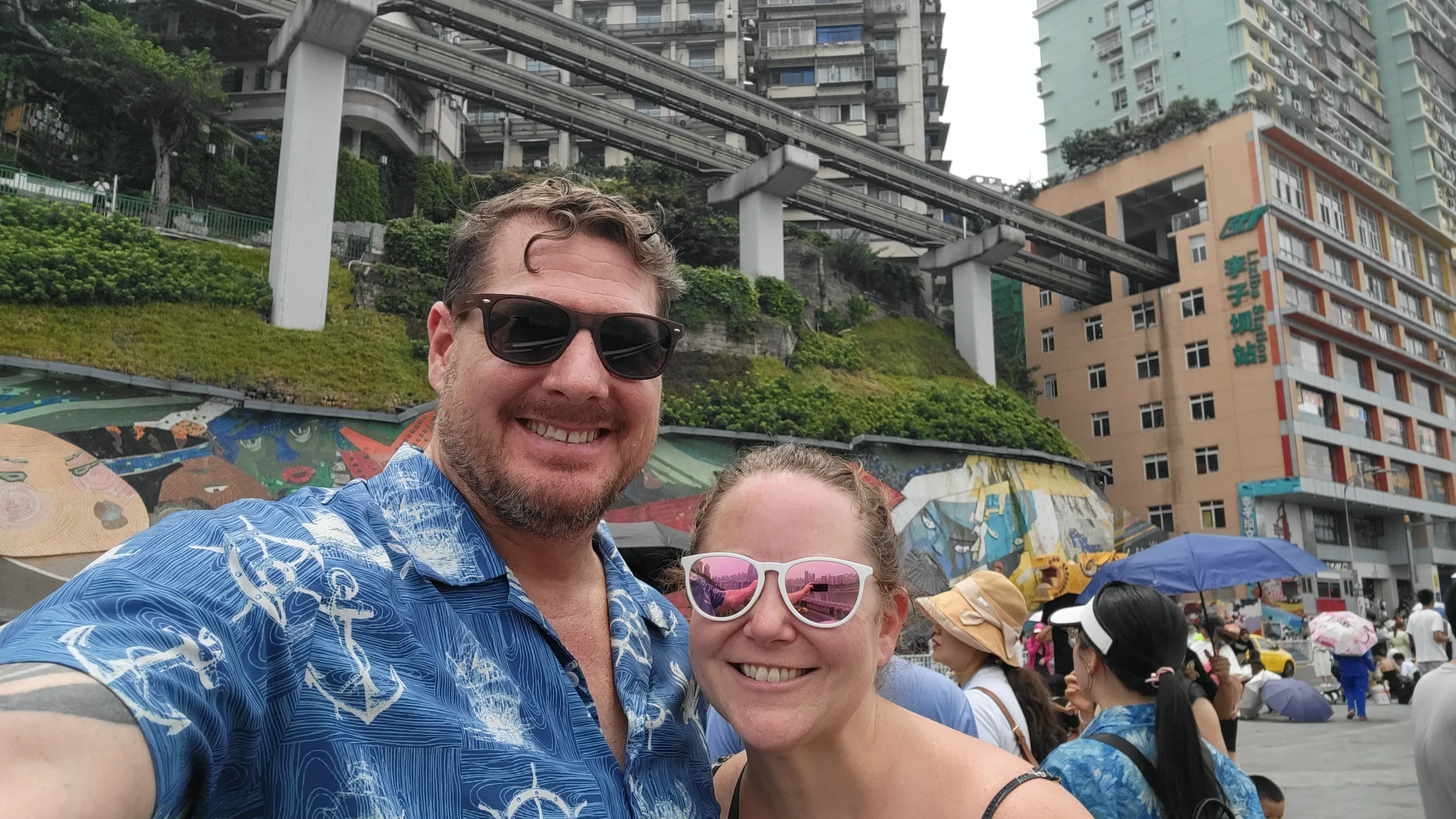
It is way more popular than it should be, but since we are here,
With the world’s current problems, we cannot see many places because they are too dangerous. This list seems to be growing every year, and hopefully, some of these places will be available again one day. There are a lot of negative things said about China. I have no idea what is true, but I know the truth is in the middle of both sides of the story. We never felt unsafe during the trip, and our interactions were pleasant. Even though we couldn’t use language to communicate, everyone was friendly and very interested in us. Many of these people have never left their village, let alone the country of China. We always try to be an excellent example of America, especially somewhere like China, since they only know what they are told or see in movies about us.
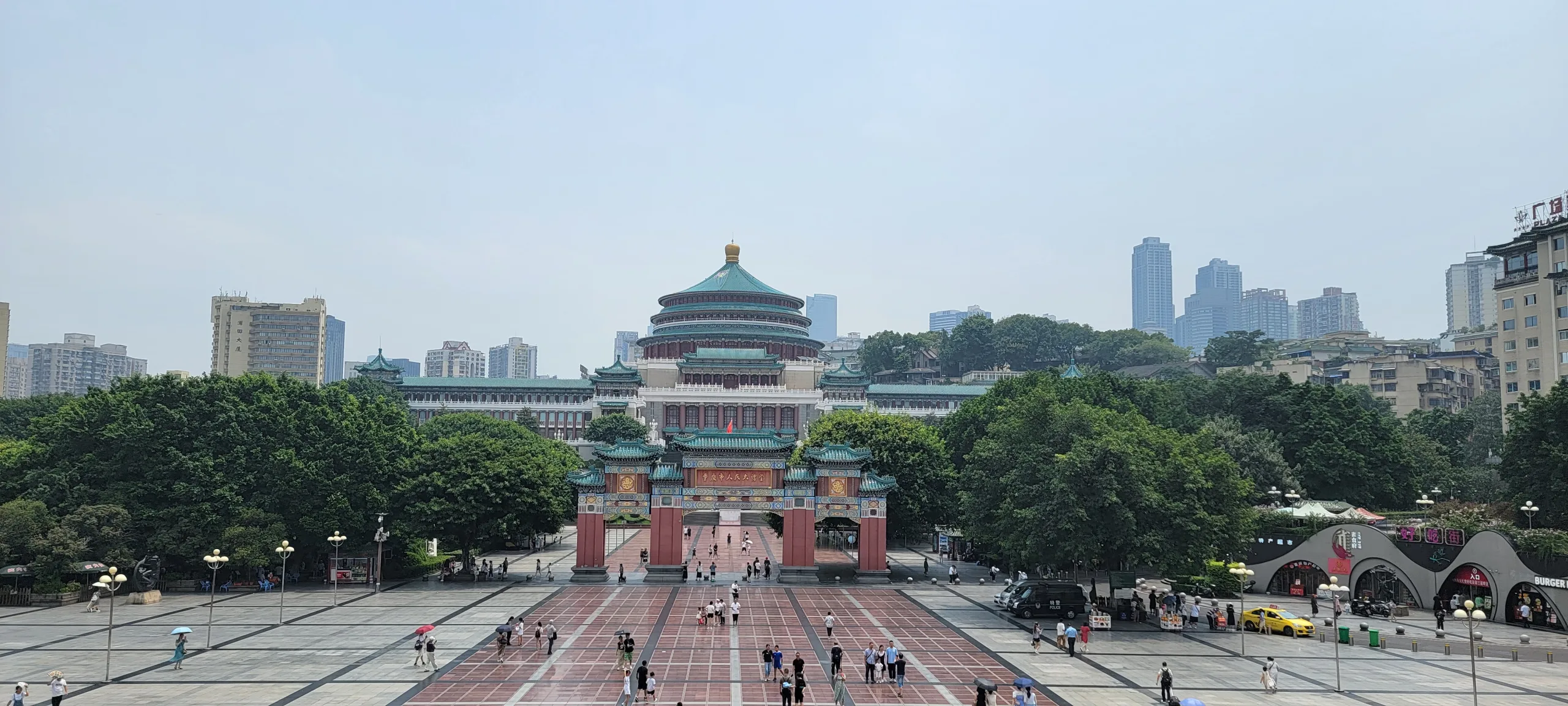
Municipal building….and a hotel.
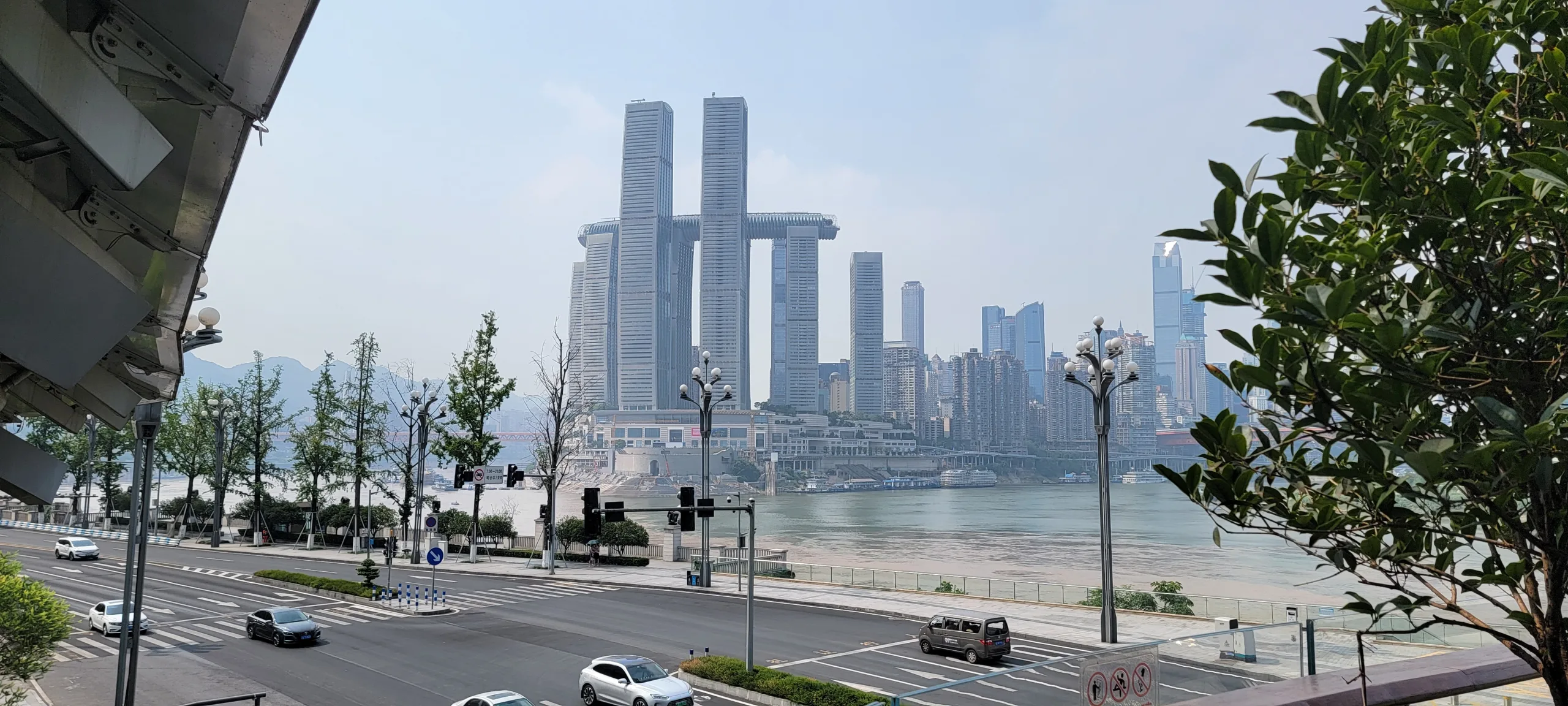
A modern hotel along the city skyline. Magnificent!
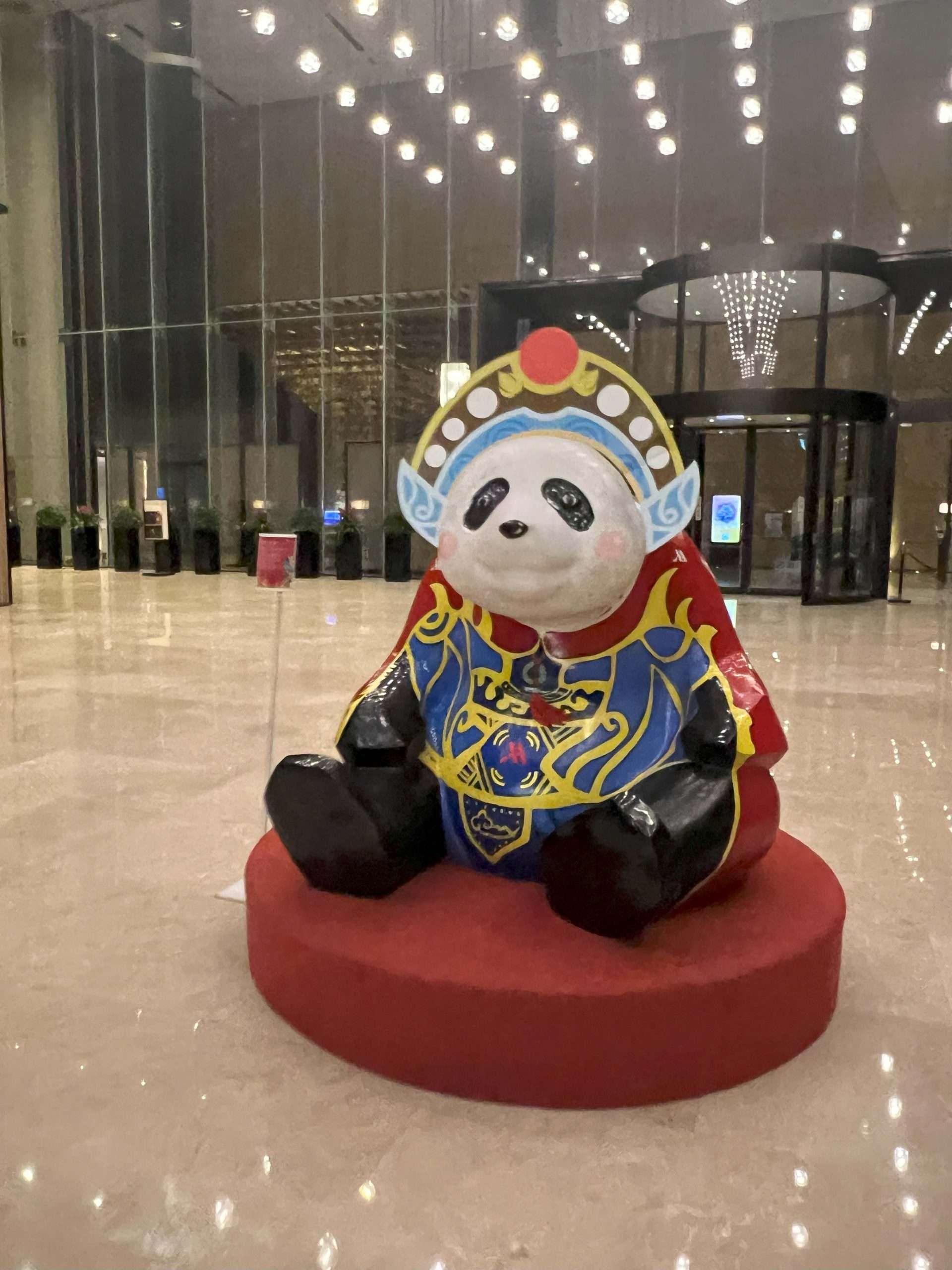
Because why not? Be more like a panda
As we complete our story of Xi’an, Chengdu, and Chongqing, the echoes of history, the warmth of local hospitality, and the tantalizing flavors of Sichuan cuisine linger in our memories. A Terracotta Army opened a portal to ancient China. Pandas and fiery gastronomic delights offered a perfect blend of charm and spice. We experienced riverside panoramas, lantern-lit streets, ancient temples, and vibrant marketplaces. Our hearts are filled with gratitude for the experiences these cities shared, and they have left an indelible mark on us. These travels inspire us to share our journey’s memories with you. Until the next adventure, farewell, and may your exploration of the world be as enriching as ours is to us.
Thank you for reading, and enjoy the photos and videos. We are adding more as we can.

Leave A Comment